Mini Mince Pies

IMG_4590

I am not suggesting that you make mince pies for Valentine’s Day, because mincemeat is so controversial. People either love it or hate it. I’m one of those that loves it. I have such fond memories of mincemeat pies as a kid during the holidays. Mincemeat is just strange and unexpected. Dark-sweet-buttery-salty-earthy-ooey-gooey-old-world-deliciousness. You will either sigh with just the memory of it, or you will go running in the other direction.

IMG_4594

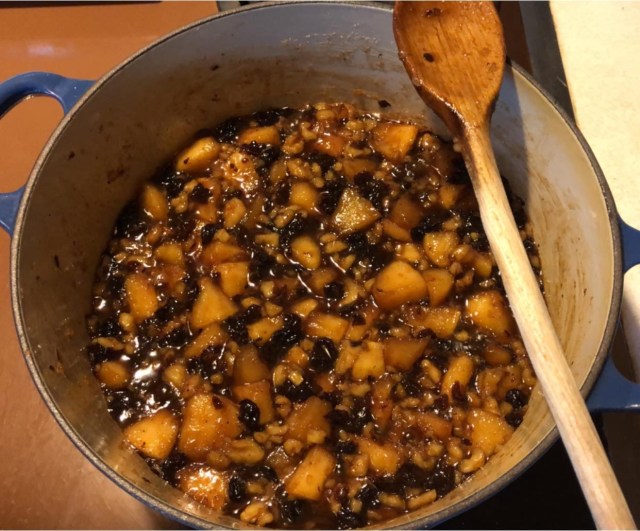
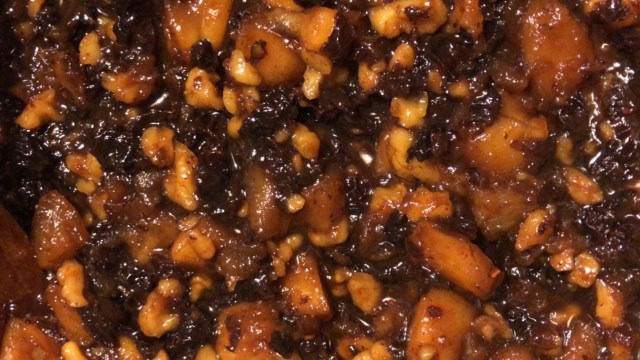
Yes, it looks like this in the beginning.

So I just needed to make mincemeat once and for all.

IMG_4593

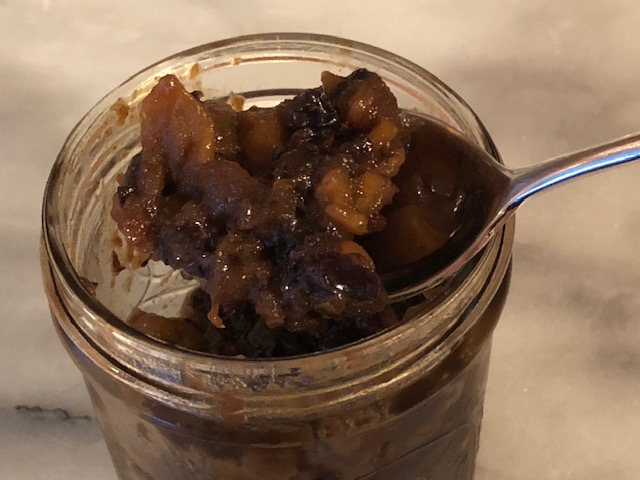
Glorious.

I kept seeing fancy looking jars of it at the grocery store. Nope. I can make it.

IMG_4595

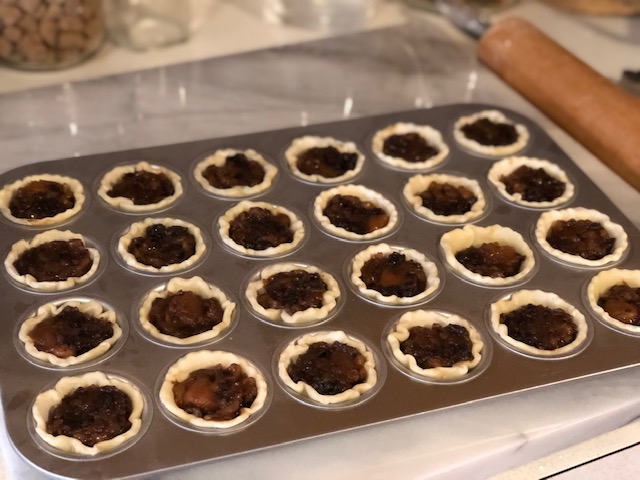
The final product.

I pulled out my trusty Joy of Cooking cookbook and got going. By the way, I chose to make mini pies, because mincemeat is very intense in flavor. So probably a teeny tiny tart is about right for most.

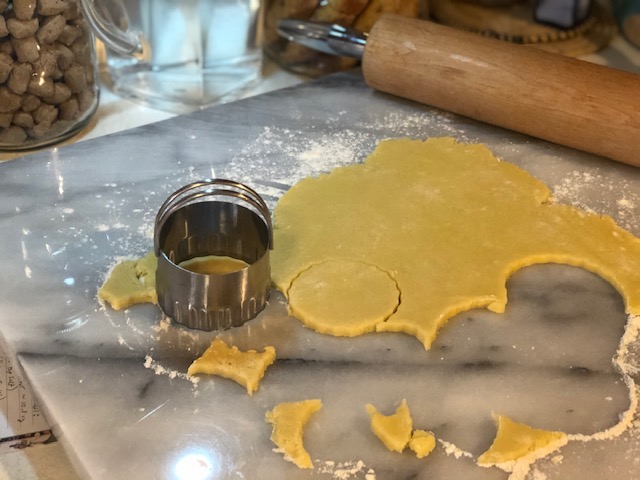
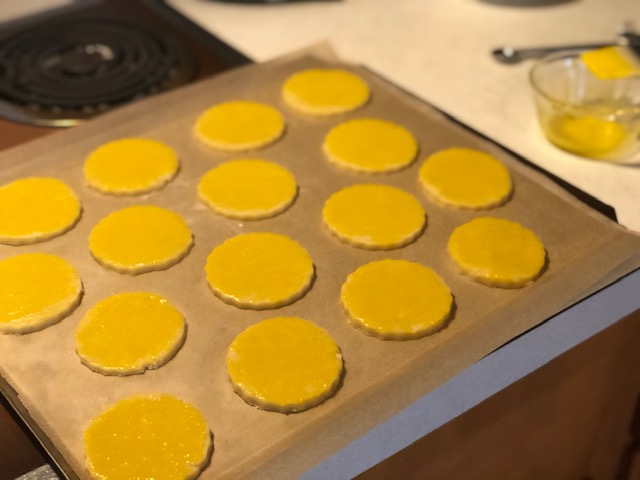
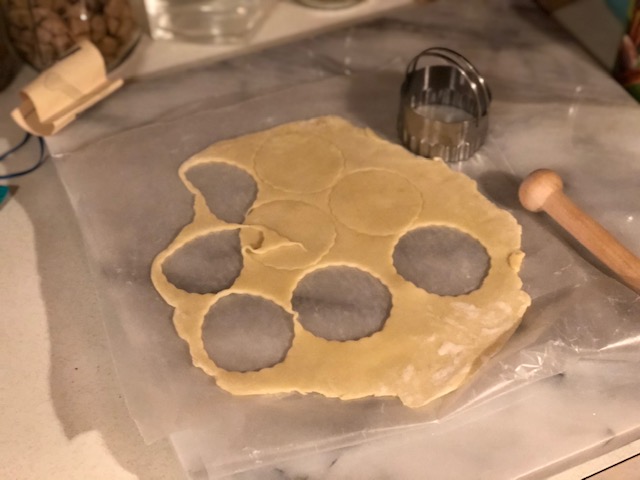
During the holidays I ended up with lots of scraps of pie crust dough, so I decided to roll it out and make little rounds using a 2″ cookie cutter.

IMG_4237

Then pop them into a mini muffin tin and freeze them. Once frozen, I pop them out of the tin and put them into a freezer bag in the freezer to use at a later time. It’s such a great way to use all those scraps.

IMG_4238

The Joy of Cooking recipe is pretty straightforward, and you will feel like you are living in a medieval village while you are making your mincemeat in your cast iron dutch oven, stirring with a wooden spoon.

IMG_4587

So cute!

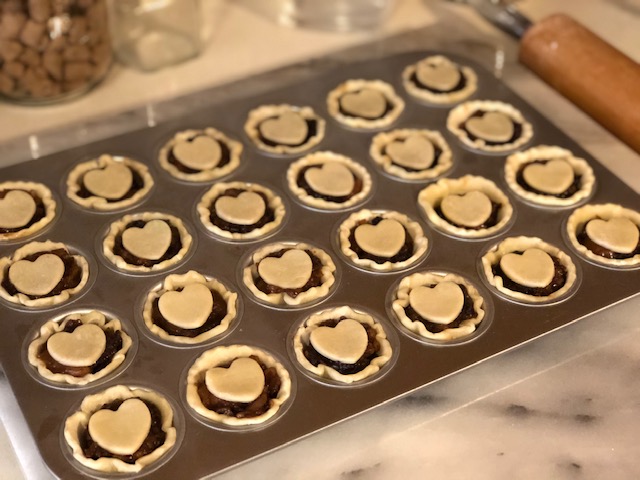
I cut out teeny tiny hearts using teeny tiny cookie cutters (for Valentine’s Day, of course) with more pie dough scraps to make these extra festive and beautiful, and to keep the mince from drying out too much during the baking. Did I mention that probably nobody in my family will eat these? I plan on passing them out to friends tomorrow. I hope they still respect me afterwards.

IMG_4588

Will you be mine?

Mini Mince Pies

(Mincemeat recipe from The Joy of Cooking)

  • 1 recipe flaky pastry dough – try this one or this one.
  • 3 medium Golden Delicious apples, peeled, cored, and cut into 3/4″ chunks
  • 1 1/2 cups dark raisins, coarsely chopped
  • 1 cup walnuts, coursely chopped
  • 1 cup sugar
  • 1/4 cup apple cider
  • 1/4 cup brandy or apple cider
  • 4 Tablespoons unsalted butter
  • Grated zest of 1/2 lemon (I used a bit more)
  • Strained juice of 1/2 lemon
  • 1 tablespoon apple cider vinegar
  • 1 teaspoon salt
  • 1 teaspoon cinnamon
  • 1/2 teaspoon ground nutmeg
  • 1/4 teaspoon ground cloves
  1. Starting with the apples, combine all ingredients in a heavy bottom pan or dutch oven and bring to a boil. Reduce heat and simmer, stirring frequently with a wooden spoon, until the bottom of the pot is almost dry and the fruits are glazed with a thick, molasses-like syrup, 20 to 30 minutes. Let cool to room temperature.
  2. While mince is cooling, roll out your pastry dough to no more than 1/8″ thick (a bit thinner is even better), and using a 2″ cookie cutter, cut twenty-four little rounds. Place them in a mini muffin tin (I made twenty four, and ended up with lots of extra mince, which keeps nicely in the fridge for a good week or two). Place the tin in the freezer. You can also cut out teeny tiny shapes using small cookie cutters (no more than 2 inches wide) with the dough scraps for topping the pies. Keep those cold in the fridge or freezer.
  3. To help cool down the mince, put it in a glass bowl and put the bowl in an ice bath. Stirring the mince helps with the cooling process. The mince needs to be at room temperature or cooler before continuing.
  4. When ready, preheat oven to 425° and place about 2 teaspoons worth (yes, I have a scoop that size) of mincemeat in each frozen tart shell. Gently flatten the filling with a spatula or wide knife. Place a cut-out topper on each pie. Place on middle rack in preheated oven and bake for 10 to 15 minutes, or until the filling is bubbly and the crust is puffy and golden.
  5. Remove from oven and let pies cool for a few minutes. After about five minutes, gently remove pies from tin and let cool on a cooling rack.
  6. Enjoy at room temperature or chilled. I would not recommend biting into one of these while the center is still hot. Not that I ever did that. But it’s a bad idea.

Notes:

**If you want to make these at a later date, mince will store nicely in airtight jars in the refrigerator for a couple of weeks, and the teeny pie shells can be removed from the tin and stored in a freezer bag in the freezer for at least a month or two. When ready to prepare the pies, place the frozen pie shells back in the muffin tin for filling and baking.

**If you don’t want to bother cutting out pie crust toppers, you could try using a streusel topping instead.

IMG_4590

Posted in Desserts, Fun in the kitchen! | Leave a comment

Curried Chicken Salad

A few days ago we ended up with some leftover rotisserie chicken after dinner, and that night I began to obsess over think about what I could make with it. Then the idea came to me: curried chicken salad. I love curried chicken salad. The first time I had it, I was a teenager, and I was with my friend Stephanie. We were in the Central West End: a very hip neighborhood in St. Louis. We were hanging out with Stephanie’s dad, who knew where all the cool places were. It may have been on this same occasion that he took us to a Rolls Royce dealership to look at fancy cars. Do you like my plaid pants?

IMG_4536

Notice our matching Jack Purcells. Jealous?

I remember that first bite of that curried chicken salad distinctly, because I wondered how something that was supposed to be a deli item for lunch could taste like a dessert. And I didn’t like things like chicken salad. And I didn’t like mayonnaise. But I did like this. Very much. And it was served on a croissant. Need I say more?

So here is how to make this salad at home. It is so easy. It’s a great way to use up leftover chicken. And it is so delicious that you might not want to share it with anyone at all. Hide it in the back of your fridge and nobody will know.

Curried Chicken Salad

  • 3 cups cooked chicken breast meat, torn into small pieces
  • 1/2 cup diced celery
  • 1/2 cup diced apple
  • 1/2 cup golden raisins
  • 1/2 cup toasted walnuts (7 minutes in a 350° oven), coarsely chopped
  • 3/4 cup Greek-style yogurt
  • 1/4 cup good quality mayonnaise (Hellmann’s, for example)
  • 1 tablespoon mild curry powder (or more if you like)
  • 1 tablespoon light brown sugar or honey
  • salt and freshly ground black pepper to taste

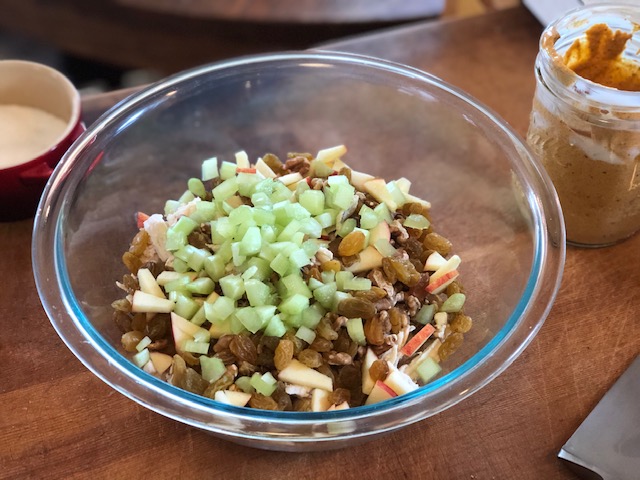
IMG_4510

Combine the celery, apples, raisins, and toasted walnuts with the chicken.

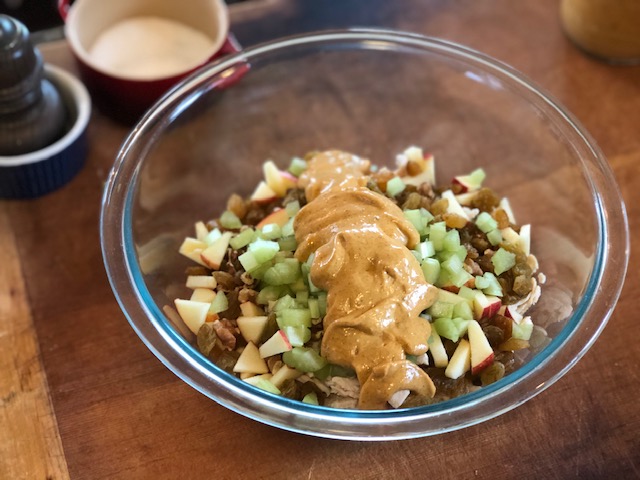
IMG_4511

Mix the brown sugar and curry powder with the yogurt and mayonnaise (you can make this with just mayonnaise, or just plain yogurt… I like the mix) to make the dressing.

IMG_4512

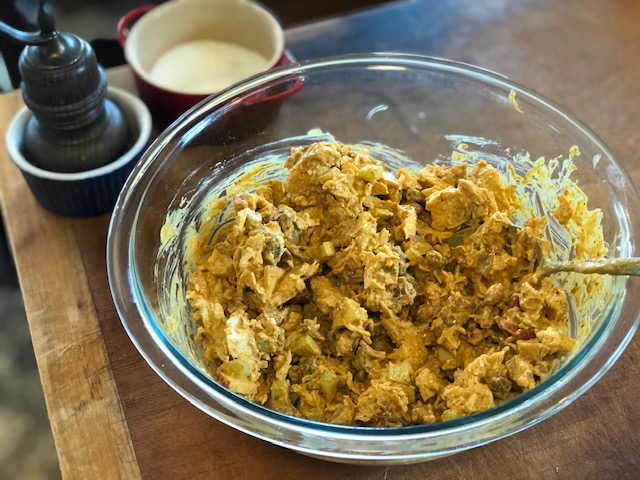
Combine the dressing with the salad ingredients. Add salt and pepper to taste. The flavors in this salad meld and mellow after a day in the fridge, but you might just have to eat it right away. It’s that good.

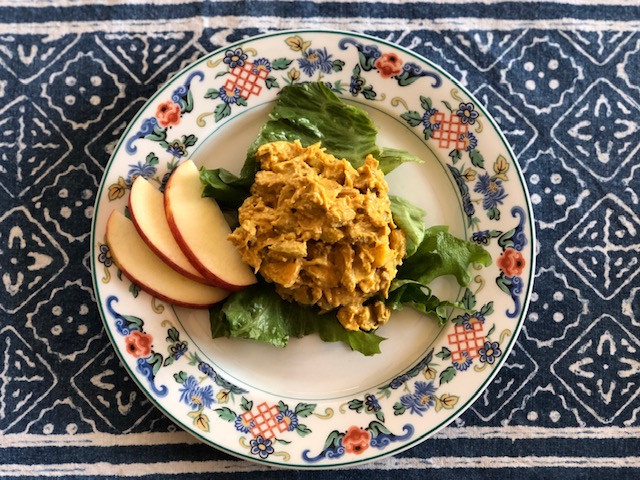
IMG_4513

Serve on a bed of lettuce.

IMG_4530

Or of course, on a croissant.

IMG_4517


Posted in Comfort Food, Fun in the kitchen!, Gluten-Free | 8 Comments

Homemade Yogurt, Take Two!

img_0449

Alert: this requires an Instant Pot with the “yogurt” function. If you don’t have in Instant Pot, it is very easy to make yogurt without one using this method.

Recently I have experimented with different ways to make yogurt. I have been making yogurt for a while now, just using my dutch oven. This required that I “incubate” the yogurt in our oven overnight, with just the oven light turned on to keep the yogurt warm. I did feel a bit nervous about the possibility that the oven light bulb would burn out in the middle of the night, leaving me with a gallon of NOT YOGURT. Everyone keeps talking about how great it is to use their Instant Pot for yogurt, so I finally decided I would give it a go.

IMG_3997

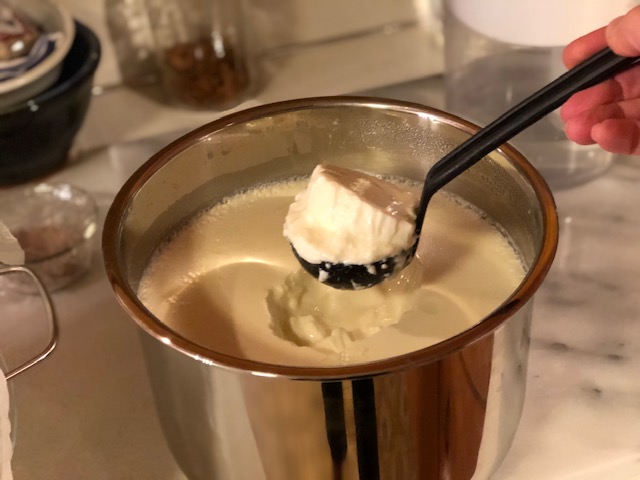
I followed the directions for Instant Pot yogurt, and ended up with less than satisfactory results. A couple of things that I didn’t like about this method. First of all, the milk heats up too fast, so some of it scorches on the bottom of the pot. Secondly, when it reaches temperature, it doesn’t quite make it to 180°. I read up online about this, and it turns out that this is a common problem, and often you have to switch to the “saute” function to get the milk to 180°, and then you’ve really scorched the bottom. If you don’t get the milk all the way to 180°, then you have very soupy yogurt. When what you really want is yogurt that looks like this:

IMG_4002

So here is my solution. Do the first part on your stove top in a dutch oven, and then use the Instant Pot for the cool down and incubation period. I love this solution. I can make yogurt during the day and it doesn’t tie up my oven (I used to have to let it incubate overnight for this reason), and I don’t have to worry about the oven light burning out! Also, the Instant Pot keeps the yogurt just a few degrees warmer than my oven light does, which I like.

Homemade Yogurt

Things you will need (you can halve the recipe if you like):

  • 1 gallon whole milk
  • 1/4 cup plain greek-style, whole milk yogurt with live cultures to use as a starter
  • Candy thermometer or instant read thermometer
  • Large dutch oven or heavy-bottom pan
  • Instant Pot with yogurt function
  • (optional) colander with cloth for straining

Update 2/21/23: I have reduced the amount of “starter” yogurt to only 1/4 cup. It works better this way. Also, please see the note at the bottom of the directions for a more streamlined version.

  1. Take your starter yogurt (1/4 cup) and put it on the counter to come to room temperature.
  2. Take an ice cube and rub it on the bottom of your dutch oven for a minute. Toss the ice cube, and dump out the drops of water from your dutch oven. No need to dry it.*
  3. Pour 1 gallon of whole milk into your dutch oven. Place your thermometer on the side of the pot. Turn the heat to medium. DO NOT COVER.
  4. Stir the milk every ten minutes (I set a timer) with a wooden spoon, but don’t let the spoon touch the bottom of the pot. You don’t want to scrape off any scorched bits that could add a strange texture to your yogurt.
  5. Your goal is to get the temperature to 180°. Once the temperature is at about 170°, start to stir constantly, and scoop out any skin that develops on top of the milk. A constant stirring at this point will discourage skin from developing.
  6. Prepare an ice bath in your kitchen sink, and have your Instant Pot insert at the ready.
  7. Once your milk has reached 180°, let it stay at this temperature for 5 to 10 minutes more. I believe that this improves flavor and adds to thickness.
  8. Ladle the hot milk into your Instant Pot insert (the inner metal pot), place the thermometer on the side of the insert, and place the insert into your ice bath. Stir the milk and watch it like a hawk. The milk needs to cool down to 115°.
  9. Once the milk is at 115°, immediately pull the insert out of the ice bath. Have your 1/2 cup starter yogurt in a larger glass. Ladle some of the 115° milk into the glass with yogurt and stir to combine. Now pour this into your warmed milk and stir gently to combine with your wooden spoon.
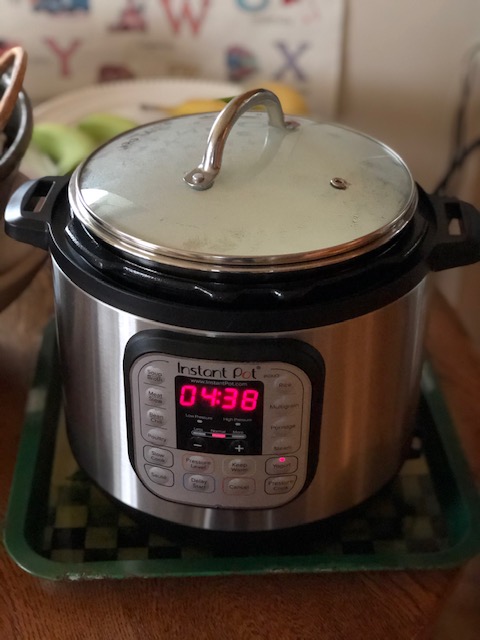
  10. Place the insert (that is full of the warm milk and yogurt starter) into your Instant Pot. Place the cover on and close. I actually use a glass lid, but either way works. Just make sure it is covered with a lid. Press the “Yogurt” button so that it is at “normal” for ten hours. And voilà. Go about your day. Ten hours later (or I like to stop it at eight hours) you have yogurt.
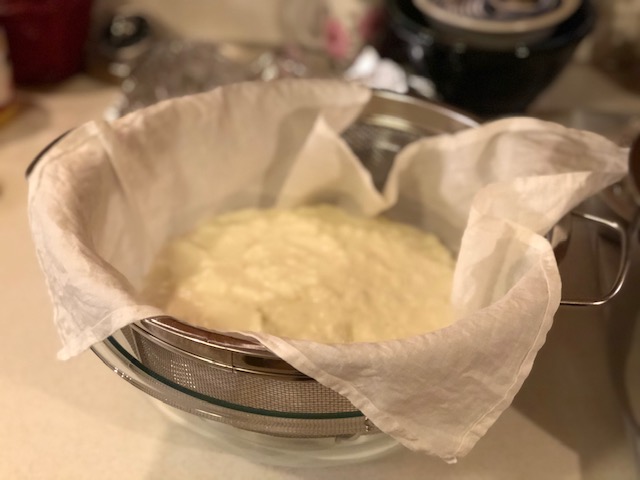
  11. If you want your yogurt to be thicker (I like it very thick), you can strain it by placing cheesecloth or a large piece of muslin into a large colander. I used to prefer cheesecloth, but now I prefer muslin. Place the colander in a large glass bowl. Ladle the yogurt into the lined colander and let strain anywhere from 4 to 8 hours. I usually let it strain on my counter for about a half hour, dumping out the golden liquid (whey) that accumulates in the glass bowl every ten minutes. After that I cover the yogurt and put it in the fridge for the rest of the straining time.
  12. After straining, put yogurt into a large glass bowl and whisk until smooth and glossy/creamy. If you have strained the yogurt, you will end up with about eight cups. If you didn’t strain, you’ll end up with a lot more.
  13. Store in glass jars in your fridge. Lasts seven to ten days. Don’t forget to save a half cup to use as your next starter.
  14. Have fun with all the different ways you will use your fabulous yogurt. You will never want to go back to store bought ever again!

Note: *Update! I now heat up my milk in the instant pot on the saute function to bring it up to 180° (or sometimes as high as 190°). I whisk it the whole time so it doesn’t scorch on the bottom. It takes about 25 minutes total, and I check my email on my phone while I whisk :). When I pull the insert out to let the milk cool down using the ice bath, I immediately press the “cancel” button on the instant pot so it has time to cool down a bit before I put the milk back in and press “yogurt”. This streamlines the whole operation, taking the dutch oven and stove top out of the equation.

I am including some pictures of the process below, as well as some ideas for how you might want to enjoy your fabulous yogurt.

IMG_9899

Heating up the milk.

IMG_4403

Ice bath in the Instant Pot insert.

IMG_3997

Incubating. I love the glass lid.

IMG_4002

After eight hours it looks ready.

IMG_4004

Straining.

IMG_9933

Whisking.

And now the fun begins.

IMG_4230

Homemade raspberry yogurt.

img_0449

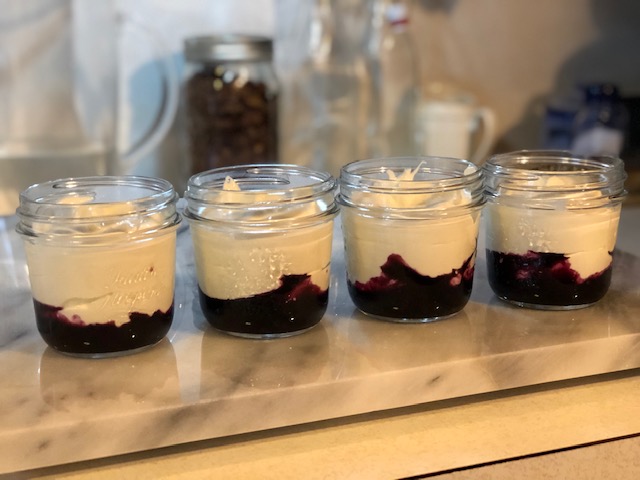
Homemade blueberry yogurt.

img_0488

Serve unsweetened with granola and maple syrup.

IMG_4328

Use in place of sour cream (here with arepas).

IMG_0933

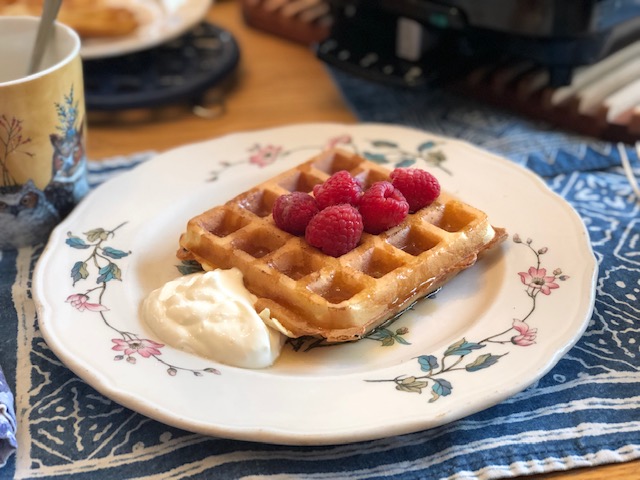
Serve with waffles.

IMG_9986

Have it on pancakes.

img_9939

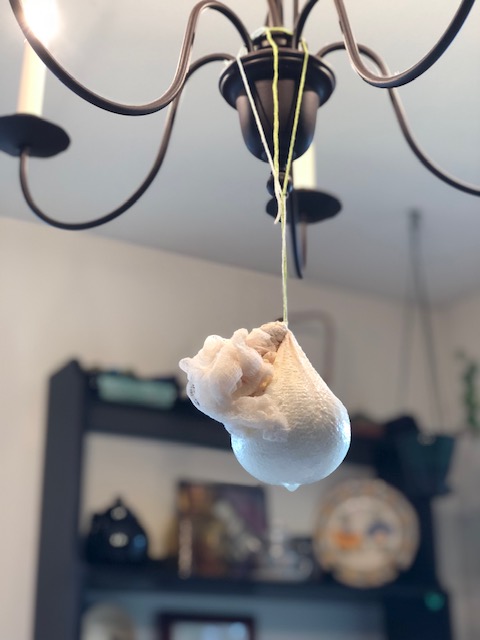
Strain longer and make cheese!

Enjoy!


Posted in Fun in the kitchen! | 11 Comments

Classic Waffles

IMG_4426

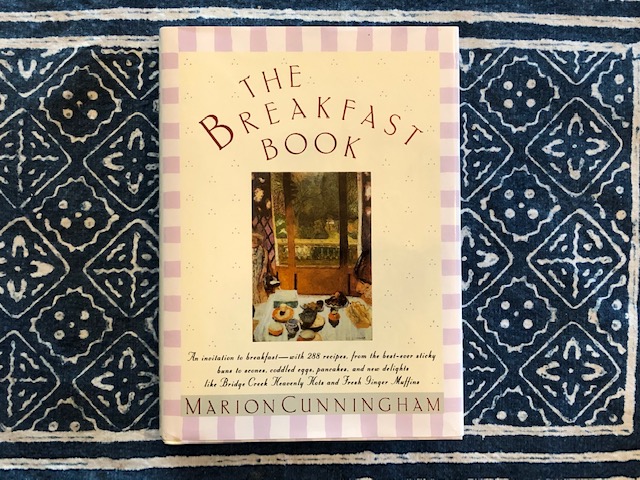
Recently, I decided to make waffles for the girls, but I didn’t have time to get all yeasty about it, so I pulled Marion Cunningham’s “The Breakfast Book” off the shelf.

IMG_4440

I love Marion Cunningham.

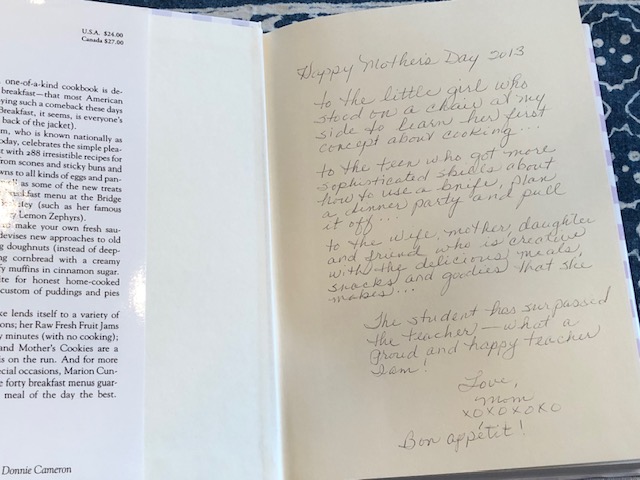
I hadn’t looked at this cookbook in a while, like perhaps since last winter when I went on a huge waffle kick, making every kind of yeast dough waffle I could find. So I opened it up. I forgot (how could I forget?) about the inscription in this book. I ordered it last year from a used bookseller. When it arrived, I opened it up and saw the inscription. Oddly, no names were used, so this could have very well been written to me by my own mom. Except that my mom passed away just days after my 16th birthday.

IMG_4447

From her college days in St. Louis.

So when I read the inscription, I imagined that maybe my mom would have written something like that to me, if she had lived to see me married, and to know her grandchildren. And I cried. And I read it over and over and over again.

IMG_4441

This book has a forever home in my cookbook collection.

This time, when I opened up the book, it felt like a gift all over again. A sweet message somehow making it all the way to me from my mom. I gave the book a hug. And then went on with the business of finding a good waffle recipe.

Now, don’t be upset, but I made these waffles just as written, and they have half butter, and half shortening. I don’t really like shortening, but odd thing is that I had some in my cabinet from all the fussing around I did with pie crust experimenting. So I just went for it. And they just may have been the best waffles I have ever made.

IMG_4426

Perfect.

Crispy golden on the outside, and moist and cake-y fluffy on the inside. Nothing fancy, no extra frills. I don’t even think there is vanilla in this recipe. And there is hardly any sugar. But my, oh my. And still being me, I had to make them again a couple of times, reducing the amount of shortening and increasing the amount of butter. Nope. Not the same. I also made them and added a bunch of homey spices to the batter. Nope. I finally made them again this past weekend, and followed the recipe almost exactly as written. Perfection. So, if you are looking for a delicious, crispy waffle recipe that is so easy it’s a no-brainer, here you go:

Classic Waffles

(Adapted from Marion Cunningham’s Classic Waffles recipe)

  • 2 cups (9 ounces) all-purpose flour
  • 1 teaspoon salt
  • 4 teaspoons baking powder
  • 2 Tablespoon sugar
  • 2 eggs, at room temperature
  • 1 1/2 cups milk, warmed slightly
  • 6 Tablespoons unsalted butter, melted
  • 5 Tablespoons vegetable shortening, melted
  1. Put the flour, salt, baking powder, and sugar in a mixing bowl and whisk together until blended.
  2. In another bowl, beat the eggs well and stir in the milk. Combine with the flour mixture just until mixed. Add the melted butter and shortening and combine well. Do not over mix.
  3. Pour about 1/2 cup batter into a very hot waffle iron. Bake waffles until golden and crisp. (Bake until there is barely a wisp of steam coming out of the waffle iron.) Serve hot. Makes about ten 4″ x 4″ waffles.

IMG_4426

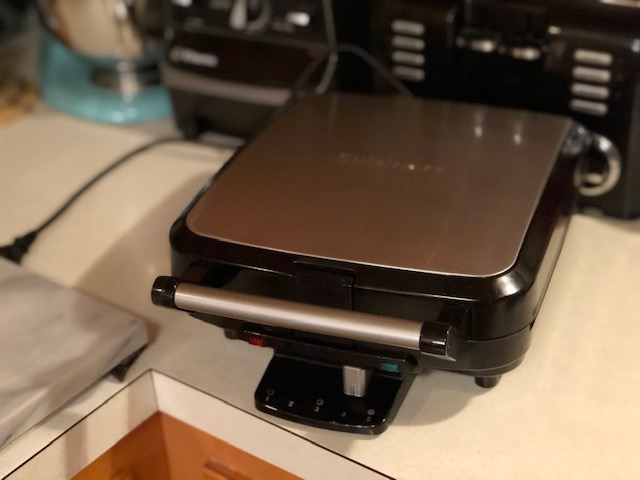
My favorite waffle iron… Cuisinart.

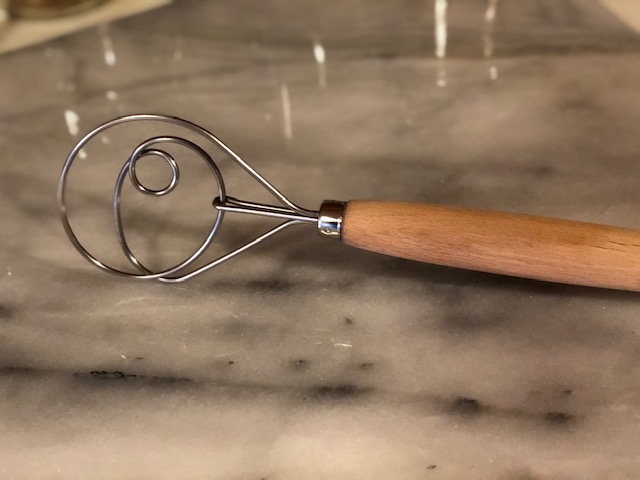
My favorite new kitchen gadget – dough whisk!


Posted in Comfort Food, Fun in the kitchen! | 4 Comments

Coconut Macaroons

No, these are not the French “macarons” that everyone is so nuts over. These are old fashioned coconut macaroons like I had when I was a kid. I remember the flavor and texture distinctly, which is why, when I went to a coffee shop with Millie, and we shared a “macaroon” that was drizzled with some lemony icing, and it had large gratings of coconut in it, and was all gooey and falling apart, I felt disappointed. Definitely not the macaroon of my childhood.

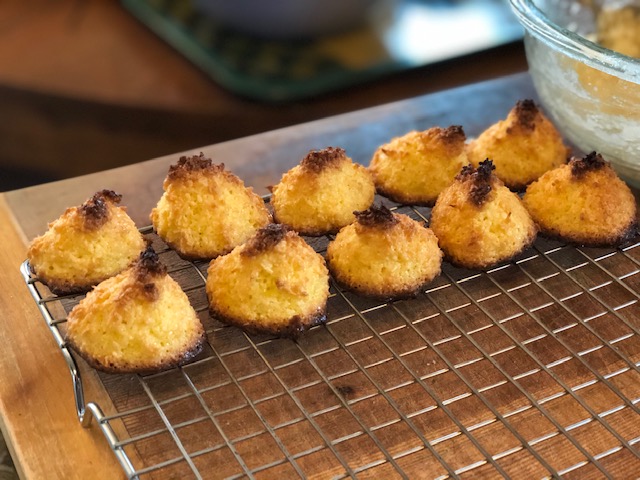
IMG_4323

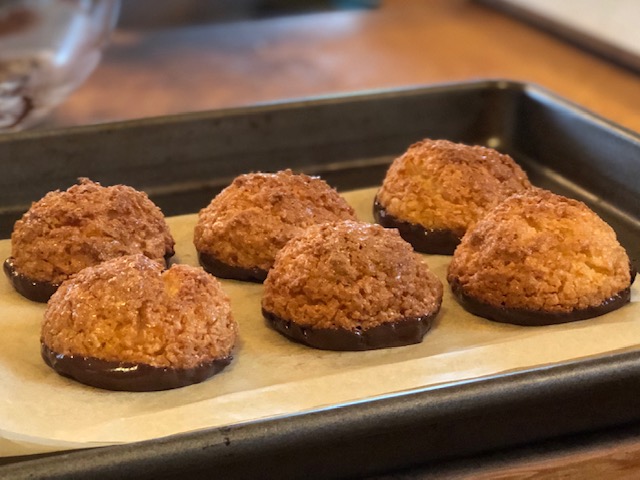
Success!

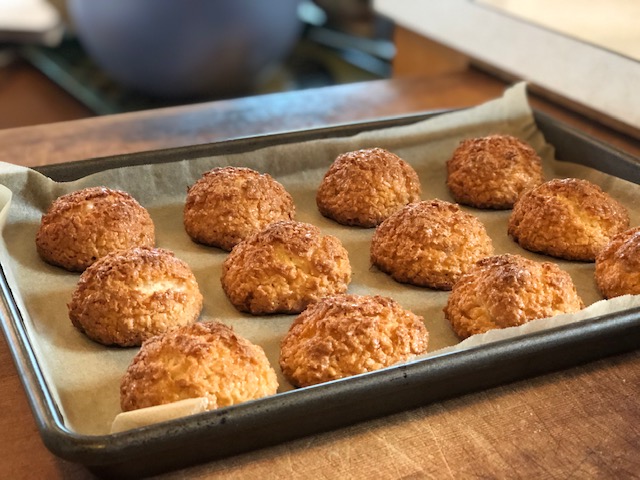
So I had to get home and look at every recipe I could find. I made a couple of different recipes that seemed popular, but I should know by now, that if I get that strange feeling that something isn’t right with a recipe upon reading it, I need to pay attention to that feeling. The first recipe I made was American, and it was made with whipped egg whites, so the macaroons ended up being light and fluffy and airy; kind of like little poof balls of airy sweetness. Like a coconut meringue. And they had a bad color, kind of a tan beige blah. Not at all what I was looking for. And because I know you want to see a picture of this, here you go.

IMG_4353

No, no, NO!

I also made a French recipe (yes, it was in French!), that called for whole eggs. I wondered to myself how the egg yolk would behave, and found that the flavor was completely off. And they were a yellowish color that I did not like. The texture was better, but everything else was a big NO.

IMG_4322

Definitely not.

Finally, I somehow tripped over a recipe that was created by an American chef living in Paris… ahhhhh, what a dream. His name is David Lebovitz, and I am pretty excited that I found his macaroon recipe. It was thoroughly accidental, because before this whole macaroon obsession started, I made some mint straciatella ice cream, and used his recipe.

IMG_4298

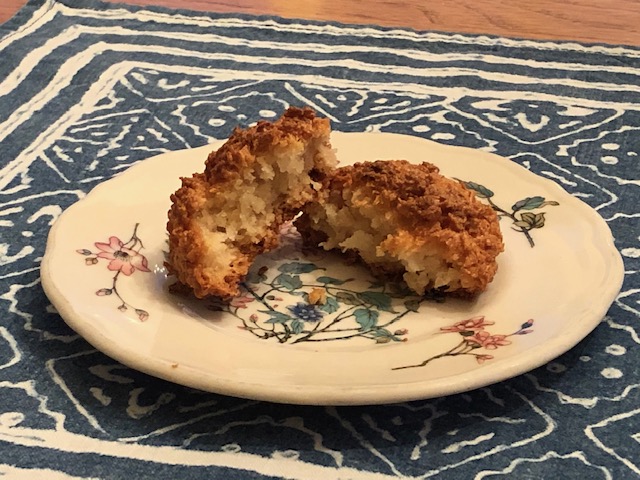
Somewhere in the back of my mind, I remembered seeing on his ice cream page: recipes that use extra egg whites. And then I remembered that one of those recipes was for Coconut Chocolate Macaroons. I had completely ignored the recipe, because I imagined the macaroons being all chocolate-y, which was not was I was after, but when I looked again, it was macaroons that had been dipped in chocolate. And they were exactly what I was looking for! The outside a golden brown from caramelized sugar, with teeny tiny bits of shredded coconut poking out. Crispy chewy on the outside, and slightly gooey on the inside.

IMG_4354

This is it!

Coconut Macaroons

(Adapted from David Lebovitz’s Coconut Chocolate Macaroon Recipe)

  • 4 large egg whites (should measure 1/2 cup)
  • 1 1/4 cups sugar
  • 1/2 teaspoon salt
  • 1 hearty Tablespoon honey
  • 2 1/2 cups unsweetened shredded coconut (see tips below)
  • 1/4 cup (1.1 ounces) flour
  • 1 teaspoon vanilla extract
  • 2 ounces bittersweet chocolate, chopped (optional)
  1. In a 10 inch skillet, mix together the egg whites, sugar, salt, and honey.
  2. Over low heat on stovetop, stir the mixture until tepid, but not warm or hot. You just want to take the chill off.
  3. In a separate bowl, mix the coconut, flour, and drizzle the vanilla on top.
  4. Add the coconut/flour mixture to the egg white/sugar mixture, and stir together over medium heat for about 5 minutes. You want the mixture to thicken just bit. It will be like thick oatmeal.
  5. Remove from heat and transfer to a bowl and let cool to room temperature.
  6. When ready to bake, preheat your oven to 350°, and line a baking sheet with parchment paper.
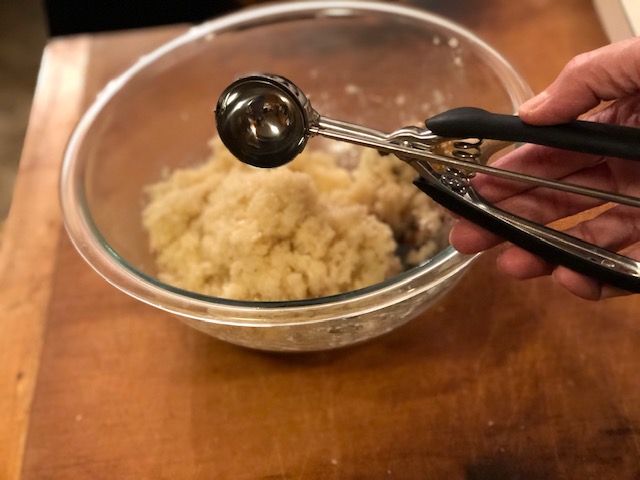
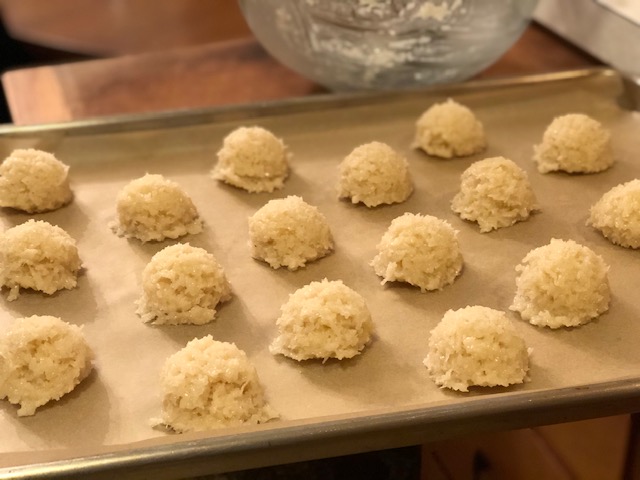
  7. Form dough into 1 1/2 Tablespoon rounds (I use a cookie scoop for this) and place on cookie sheet evenly spaced. Bake on center rack in oven until macaroons are a deep golden brown, about 20 to 25 minutes. Cool completely.
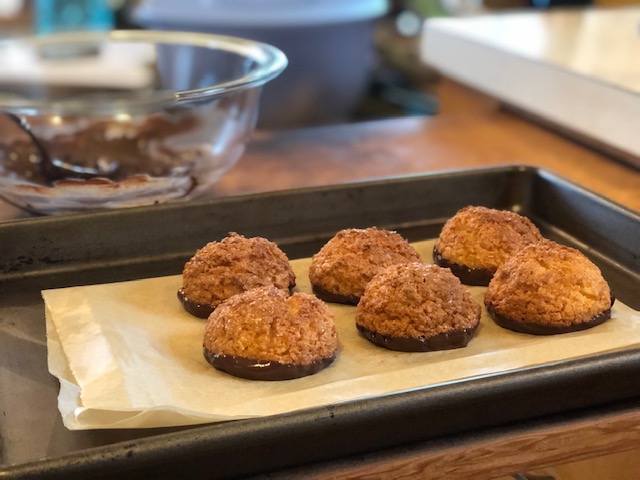
  8. To dip the macaroons in chocolate (optional), slowly melt the chocolate in a glass bowl in the microwave, or in a saucepan on your stovetop, and dip the bottom of each cookie into the melted chocolate. Place on a cookie sheet lined with parchment paper and refrigerate for 5 to 10 minutes, until the chocolate is set.

Pictures with tips:

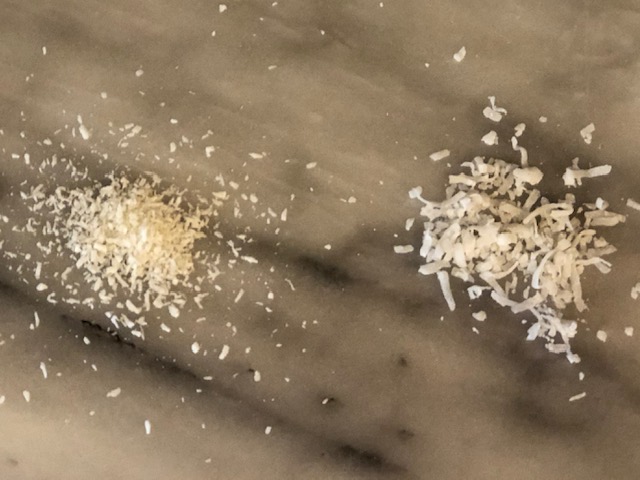
You really want to use the right kind of coconut. Do NOT use flaked coconut. The flakes are too big and will ruin the consistency. I use Bob’s Red Mill Shredded Unsweetened Coconut, and the size and texture is perfect.

IMG_4338

And if you are unable to find Bob’s Red Mill brand, here is a picture of what the unsweetened shredded coconut looks like (on the left), compared to the flakes of sweetened on the right that we are all familiar with. Just in case you don’t believe me about there being a big difference. The shredded unsweetened is much smaller, and that is what you want.

The one on the left is what you want!

I think it is worth it to measure the egg whites. You should have a hearty 1/2 cup of egg whites, and 4 large egg whites should do it, but just to be sure…

IMG_4302

Using the right sized pan is essential. The first time I made these, I used a pan that was too large, and I dried out the egg mixture. This is a 10″ pan, which works well.

IMG_4341

This is the egg whites with the sugar, honey and salt.

Here is the thickened egg/sugar/coconut mixture. This is about right. Don’t dry it out! The mixture will firm up once it has cooled down to room temperature.

IMG_4343

If you let the dough cool to room temp, the cookies keep their shape better.

IMG_4344

I use a cookie scoop (1 1/2 Tablespoon size) to scoop these cookies. It works like a charm. In fact, it works like a charm for all cookies, so if you don’t have one yet, put it on your want list.

IMG_4345

Leave about two inches space between cookies. They spread a little, and they will bake more evenly with plenty of space. And only bake one cookie sheet at a time.

IMG_4348

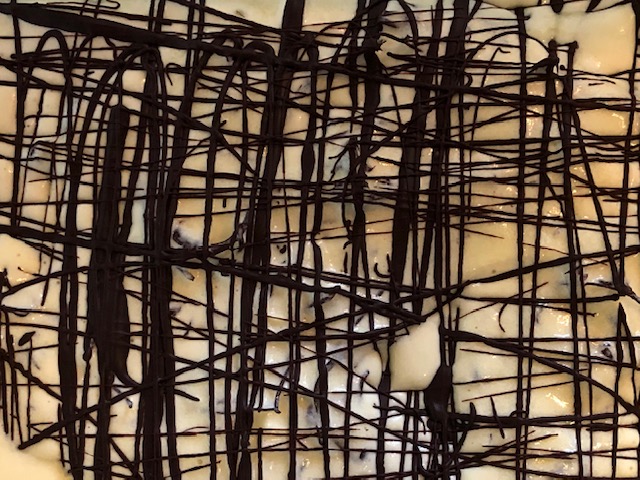
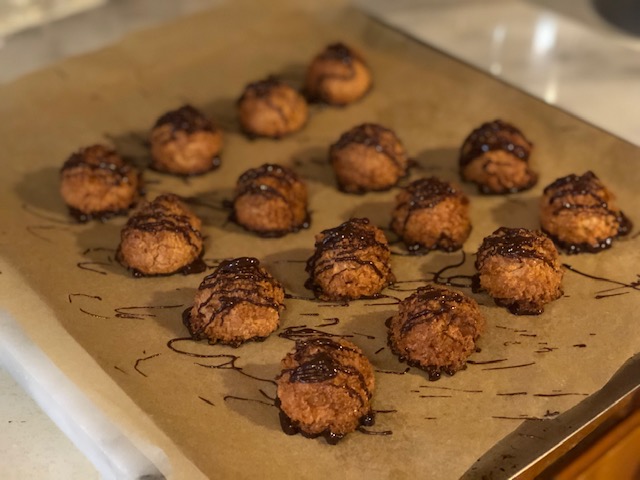
You can even get fancy and drizzle melted chocolate on top of the macaroons, as well as dipping them.

With or without the chocolate, these macaroons are chewy, gooey, and just how I remembered them!
IMG_4323

IMG_4324

IMG_4354

Posted in Cookies, Fun in the kitchen! | 4 Comments
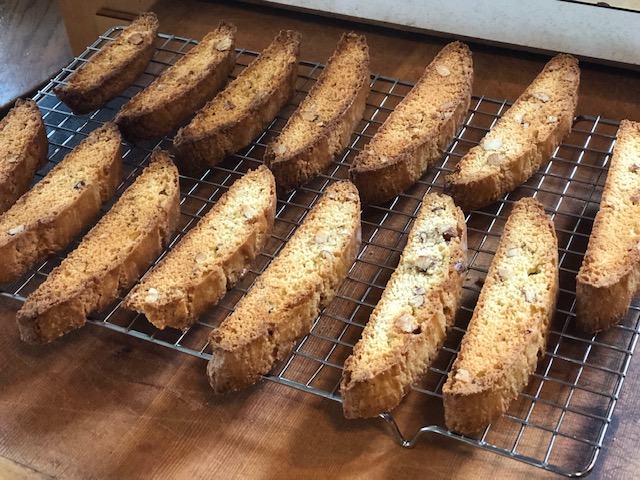
Almond-Anise Biscotti

IMG_4080

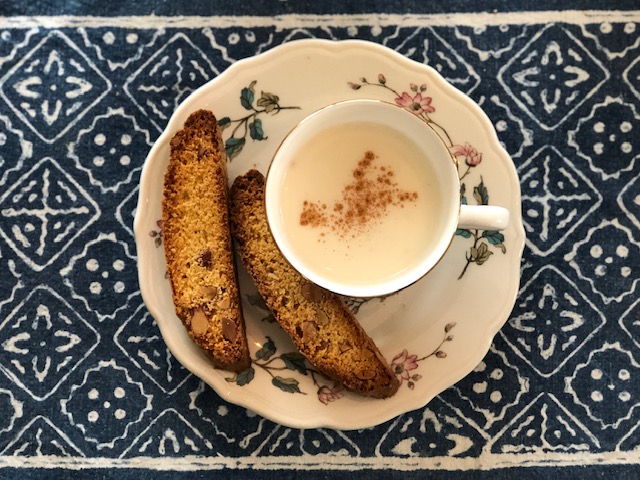
During the holidays, after a long shopping excursion, Millie and I stopped at our local crêperie/bakery/coffee shop, Cafe Javasti. I can’t remember what Millie got, but I remember exactly what I had: the best decaf cafe latte, and the best almond biscotti ever! Normally I would always choose some sort of flaky pastry or cinnamon-y coffee cake over a biscotti, but for some reason, this time I went for the hard Italian cookie. Wow. Was I surprised! It was so light and crispy, kind of melt-in-your-mouth, not tooth-breakingly hard, and paired with some of the best coffee around, I was in heaven! So of course when I got home, I immediately started looking at recipes.

IMG_4270

After a bit of searching, I found this recipe, Anise-Almond Biscotti, by Janet Mercuri. All the reviews were fantastic, so I gave it a try. I only barely tweaked a few things: like adding a tad more salt, and adding more ground anise seed, which I ground myself using my mortar and pestle. The fragrance that is released when doing this is intoxicating.

IMG_4254

I also found a great trick for how to make the dough easier to handle. Normally you have to form logs out of sticky soft dough, and then transfer it to the baking sheets, which can be difficult, even with floured hands.

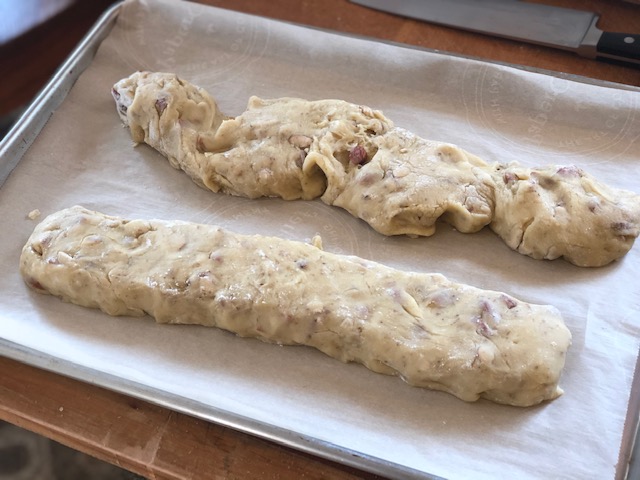
IMG_4067

Barely got the second “log” on the cookie sheet without having it fall apart.

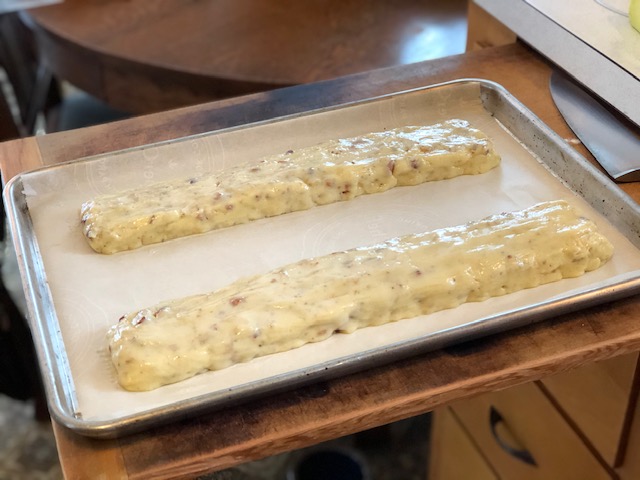
After reading more recipes (you have to read a lot of recipes to get everyone’s wonderful tips), I found a great method: scoop large spoonfuls of dough in a row onto the cookie sheet, and then form into logs with floured hands. This works perfectly.

IMG_4271

Before forming the logs.

IMG_4068

After forming the logs with floured hands.

One of the great things about these cookies is that they just keep getting better and better. In fact, when I first made them, I tried one shortly after they had cooled, and I was underwhelmed. I didn’t know that biscotti become more flavorful and delicious after a few days, and I didn’t know that they would still be wonderful after a month! Which is fantastic, because I made them just before Christmas, when we were all feeling completely sugared out, so they sat in jars on the kitchen counter being ignored for quite a while before I felt like trying one again. Even Matthew likes them, and he doesn’t like biscotti.

IMG_4278

Almond-Anise Biscotti

(Adapted, just barely, from Janet Mercuri’s recipe)

  • 3 1/4 cups (14.75 ounces, or 420 grams*) all purpose flour
  • 1 Tablespoon baking powder
  • 1/2 teaspoon salt
  • 1 1/2 cups sugar (300 grams)
  • 10 Tablespoons unsalted butter, melted (142 grams)
  • 3 large eggs at room temperature
  • 1 Tablespoon vanilla extract
  • 1 Tablespoon anise seed, ground
  • 1 cup whole raw almonds, toasted and coarsely chopped
  • 1 large egg white
  1. Preheat oven to 350°
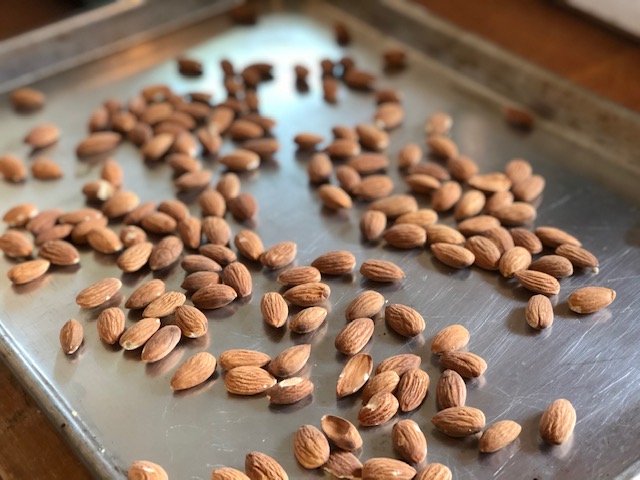
  2. Place 1 cup of whole raw almonds on baking sheet and toast in preheated oven for 10 to 12 minutes. Chop coarsely once cooled.
  3. In a medium bowl, whisk together the flour, baking powder, and salt.
  4. In a large bowl, mix together the sugar, melted butter (lukewarm, not hot!), eggs, vanilla, and ground anise seed with a wooden spoon.
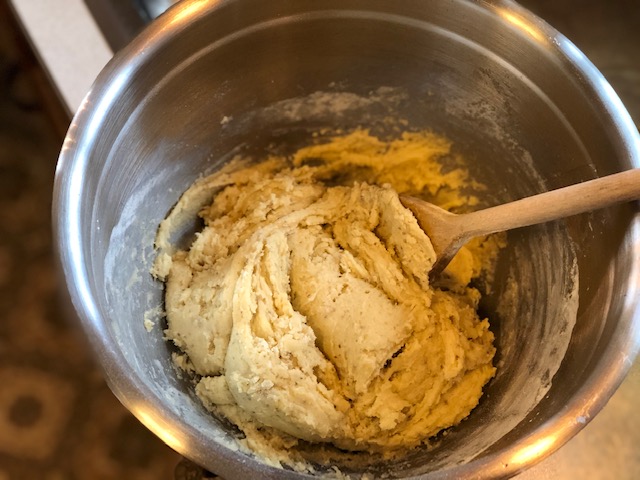
  5. Add the flour mixture to the wet ingredients and stir with wooden spoon, just until the flour is incorporated. Do not over mix.
  6. Stir in the chopped almonds.
  7. Line a baking sheet with parchment paper, and with a large serving spoon, place dollops of dough in two rows on your baking sheet. There should be about 4 inches of space between the rows.
  8. With floured hands, form dough into logs about 2 1/2 inches wide and almost as long as the cookie sheet. The logs might be about 1 inch tall. (At this point, you can put the logs into the refrigerator to chill for a half hour – optional! – to firm up the dough. This means your dough will not spread as much when baking, making for shorter, wider biscotti. You decide.)
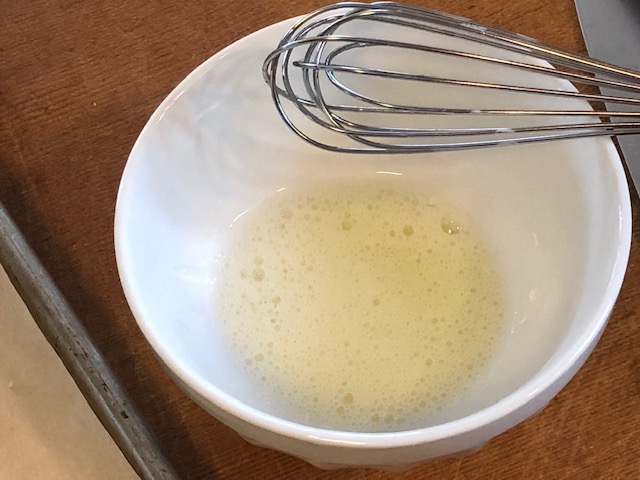
  9. Whisk the egg white until foamy, then brush the tops and sides of the dough with it.
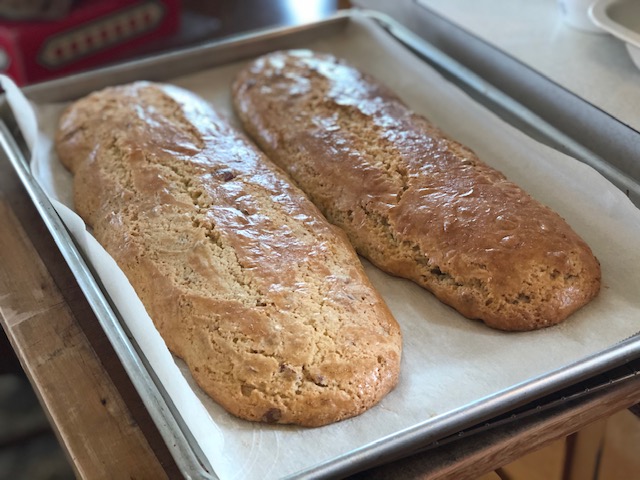
  10. Bake on center rack of oven for 30 minutes.
  11. Place the baking sheet on a cooling rack, and allow the cookie logs to cool on the sheet for 25 minutes.
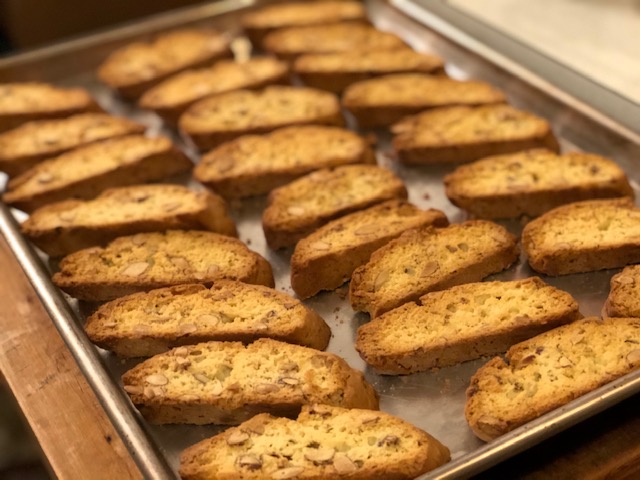
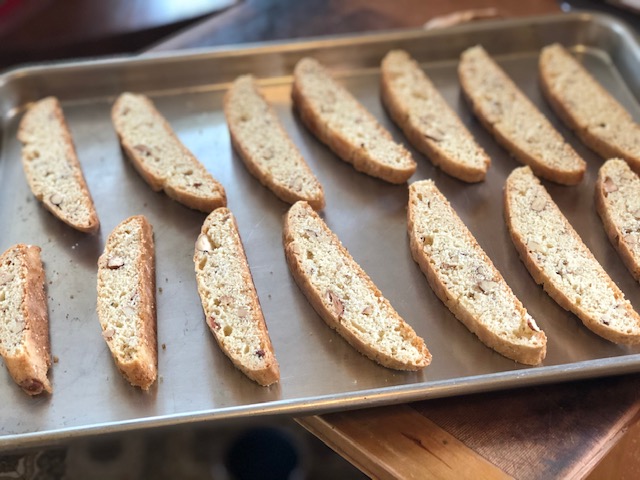
  12. Carefully place the cooled logs on a cutting board (discard parchment paper). Using a sharp serrated bread knife, slice on the diagonal into 1/2″ thick slices (mine are 5/8″) – use a sawing back and forth motion. Don’t fret if some of the biscotti crumble a bit.
  13. Place slices cut side down on the baking sheet and bake for about 12 minutes. Flip the biscotti and bake for another 8 minutes. If you prefer your biscotti less toasted, try 10 minutes on the first side, and 6 minutes on the second side.
  14. Remove from cookie sheet and let cool completely on cooling rack. Store in an airtight container at room temperature. Stored properly, these will stay fresh for a month. Makes about 36 biscotti.

P.s. To make chocolate biscotti, keep all the ingredients the same, but remove 6 tablespoons of the flour and replace with 6 tablespoons cocoa. Add 3/4 cup mini semi-sweet chocolate chips (I use Ghirardelli) when adding in the almonds. You can also add one teaspoon orange zest to the wet ingredients.

Notes:

*The gram weight here is based on a cup of flour weighing 130 grams. To have a similar weight without using a scale, stir to aerate you flour, then scoop up the flour using your measuring cup and level with a knife. Do not compact the flour in any way. For the record, I sometimes change how I weigh or measure my flour based on the individual recipe (sorry, but it’s true!), and I tested this recipe using a total of 420 grams all-purpose flour, and the results were perfection.

**I wanted to mention why I might just be a little obsessed with these cookies, and why I have been making them for a month now, aside from the fact that I needed to find the perfect recipe… Having grown up in St. Louis, I have so many fond memories of “The Hill”, which is the Italian section of St. Louis: blocks and blocks of modest older brick homes, and at the center, the best Italian restaurants, grocery stores, bakeries and cafés you could ever wish to find. When I was a kid, my mom used to take us to Viviano & Sons grocery store on the Hill. As soon as you walked into the place, you were hit with the pungent aroma of olives, olive oil, strong cheese, freshly baked bread, and yes, anise seed. So I might just bliss out when I am making these cookies. I hope you will too.

IMG_4249

IMG_4257

IMG_4252

IMG_4259

IMG_4262

IMG_4065

IMG_4271

IMG_4068

IMG_4272

IMG_4274

IMG_4070

IMG_4071

IMG_4072

IMG_4080

IMG_4278


Posted in Comfort Food, Cookies, Fun in the kitchen! | 11 Comments

Hearty Quiche

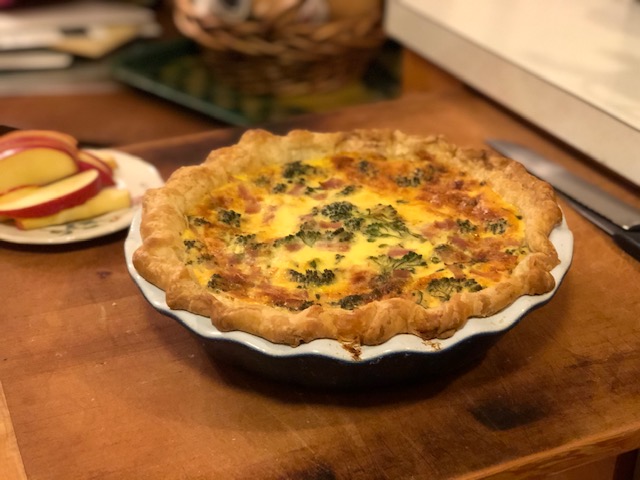
IMG_4246

I know that quiche is one of the easiest things to make, but I still have to write about this, because I do not like a wimpy quiche. What is a wimpy quiche? It’s a quiche that is not very tall, it’s a quiche with a flabby, thin crust, it’s a quiche that is too egg-y or watery, where the crust falls backwards onto the plate. I’m too upset about it to post a photo, but I think you get the picture.

[Imagine it here.]

I believe that quiche should be very tall and sturdy, chock full of wonderful ingredients. And the crust, well, the crust should be fantastic! Buttery, flaky, but sturdy enough to stand tall with the rest of the quiche.

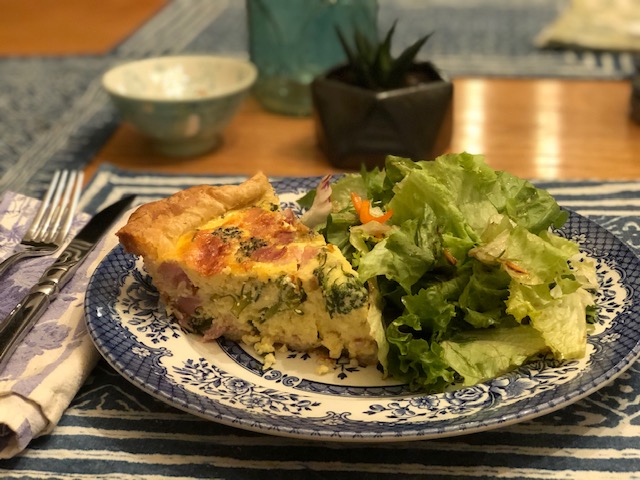
IMG_4247

Quiche is best served with mixed greens.

When I was in college I waited tables at Bernard’s, a lovely French bistro in St. Louis. They had the best quiche. Tall, firm, cheesy, but not too much so, and filled with the best ingredients. I am forever ruined because of it. I am disappointed when I order quiche at restaurants, and get a wimpy quiche. Or even worse, a microwaved wimpy quiche. How dare they. You would think it wouldn’t happen, but oddly, it is all too common.

IMG_4243

Bernard’s is on the right.

So here I am to tell you about my favorite quiche recipe. It’s of course very simple, and the recipe comes from Ree Drummond, the fabulous Pioneer Woman. She uses a deep dish pie pan… I mean a really deep dish pie pan.

IMG_3684

Most of the time, I use my trusty Emile Henry deep dish pie pan, and it works out just fine, but sometimes I go crazy and use the one that you see above. Also, Ree’s quiche recipe uses 8 eggs. Yep, 8. I recently called a local bakery and grilled the baker on her crust recipe; then we got to talking about quiche. Then she says, as if letting me in on a secret, “Oh, and add more eggs”. YES!!! She and I both agreed that nothing is worse than a wimpy quiche! So don’t be afraid of all the eggs in this recipe. You will love it, and you will impress your friends and family.

Ham and Broccoli Quiche

(Adapted from Ree Drummond’s recipe)

  • 1 frozen deep dish unbaked pie crust (see note below)
  • 8 eggs
  • 3/4 cup whole milk
  • 3/4 cup heavy cream or half and half
  • Dash nutmeg
  • salt and pepper to taste
  • 1 cup steamed baby brocolli
  • 1 cup chopped black forest ham
  • 2 cups shredded gruyère cheese
  1. Place a rimmed cookie sheet on the bottom rack of your oven, and preheat oven to 400°.
  2. Whisk eggs, milk, cream, nutmeg, salt and pepper in a large bowl.
  3. Add and mix in the cheese, ham, and broccoli (or any ingredients you like, as long as they are not watery).
  4. Pour mixture into your frozen pie shell.
  5. Place quiche on the cookie sheet, and place a piece of aluminum foil lightly over the top of the quiche.
  6. Bake for 45 minutes. After 45 minutes, remove the foil and bake for another 15 minutes or so. The center of the quiche should be set. It should not look liquidy. When in doubt, bake it a bit longer. Mine usually takes a total of 70 minutes, but every oven is different. After an hour start checking every 5 minutes.
  7. Remove from the oven and let cool for at least an hour before serving. This quiche actually tastes better the next day, in my opinion. The custard sets nicely and the flavors mingle, and the crust gets extra crispy. To serve the next day, slice the quiche and heat individual pieces in a preheated 300° oven on a metal cookie sheet for 10 to 15 minutes. Make sure there is room between the slices.

Note:  I like to prepare pie crusts and roll them out ahead of time, and wrap them well, pan and all, and keep them in the freezer so they will be ready at a moment’s notice when I feel like making quiche or pie. They are unbaked and frozen, in the pan, just like the ones you would get at the grocery store. But it’s really worth it to have homemade crust! Both my Emile Henry ceramic pie dishes and the metal ones can go right into a hot oven from frozen. Do it.

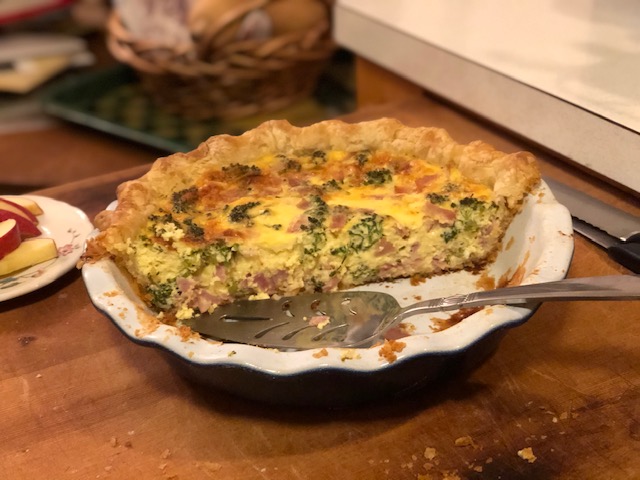
IMG_4248

You can see how the crust is golden all the way along the bottom: not soggy!

IMG_4247

Bon apétit!


Posted in Comfort Food, Fun in the kitchen! | 4 Comments

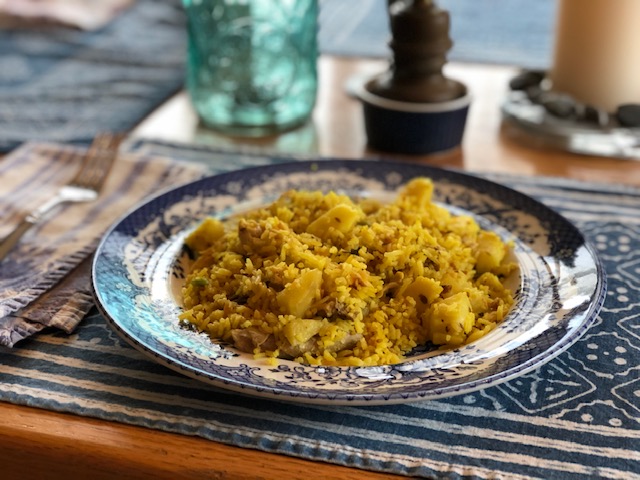
Cumin Rice and Potatoes

IMG_3988

I absolutely love this rice. My friend Susan gave me the recipe oh so many years ago. Susan and I met when our oldest kids were just little, and they were taking swim lessons. We would sit at the side of the pool and chat about life, about raising kids, about just about anything; Susan is very fun to talk to. And of course, we talked about our favorite recipes.

IMG_3958

I remember her telling me that this rice is so good that she eats it right out of the pan. And that is just what I do. After dinner, of course.

IMG_3960

This rice is very easy to make, and the only oddball ingredients that you might not have easily on hand are cumin seed and turmeric. I get them in bulk at the grocery store, so just the amount that I need, although I do keep some in the pantry now, knowing that I will make this rice on a regular basis.

IMG_3961

IMG_3962

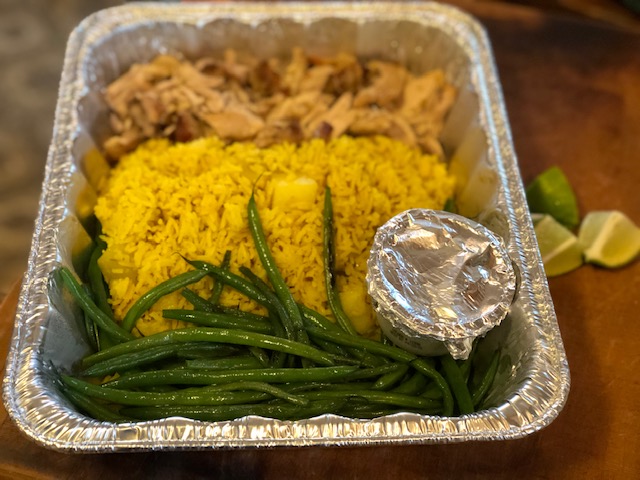
I love to make this rice for bringing meals to friends… the rice really is the star performer. Just throw in some sautéed veggies and slow cooked meat, and you have a wonderful meal that is easy to make, package, and transport.

IMG_3968

One of the best things about this rice is that it makes spectacular leftovers. It is wonderful heated up in a frying pan the next day with veggies and whatever else you have on hand, or just as is; the rice gets a little crispy, and if you know me well, you will know how much I love crispy rice.

IMG_3991

Cumin Rice and Potatoes

(from The Feast of Santa Fe, by Huntley Dent)

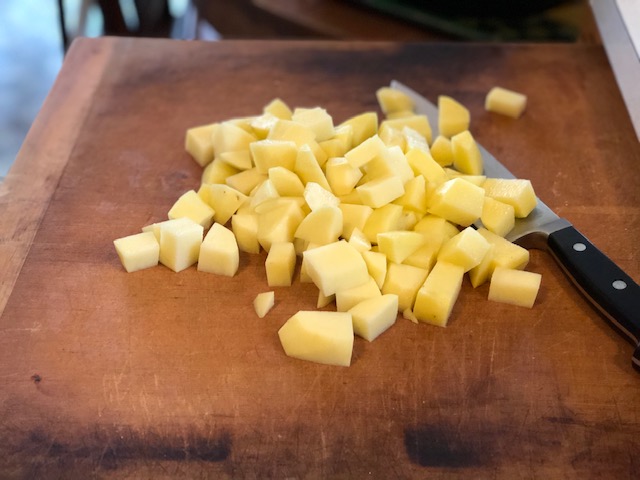
  • 2 medium boiling potatoes (I use Yukon Gold), peeled and cut into 1-inch pieces
  • 3 Tablespoons vegetable oil
  • 1/2 teaspoon whole cumin seed
  • 1/2 teaspoon turmeric
  • 1 rounded cup long-grained white rice (I use basmati rice)
  • 1 tsp salt and freshly ground black pepper to taste
  • 2 cups water
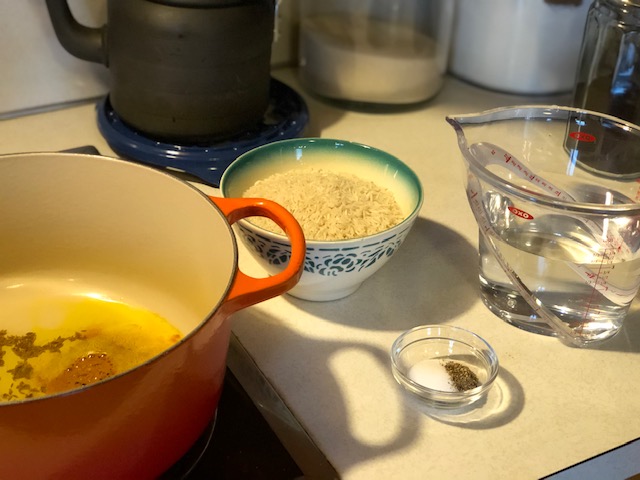
  1. In a dutch oven or heavy bottom saucepan, heat the oil on medium heat.
  2. Add the cumin seed and turmeric and stir for a minute  – do not let the seeds turn dark.
  3. Stir in the potato pieces and coat well with the oil.
  4. Add the salt, cracked pepper, and rice, stirring over med-high heat to slightly brown the rice.
  5. Pour in 2 cups water
  6. Bring to a boil, then lower heat to a slow simmer. Cover and cook for 20 to 25 minutes until water is absorbed. Remove cover, fluff with a fork, cover again and let sit for about 5 minutes before serving.


Posted in Fun in the kitchen!, Side Dishes | Leave a comment

Turkey Wild Rice Soup

IMG_3919

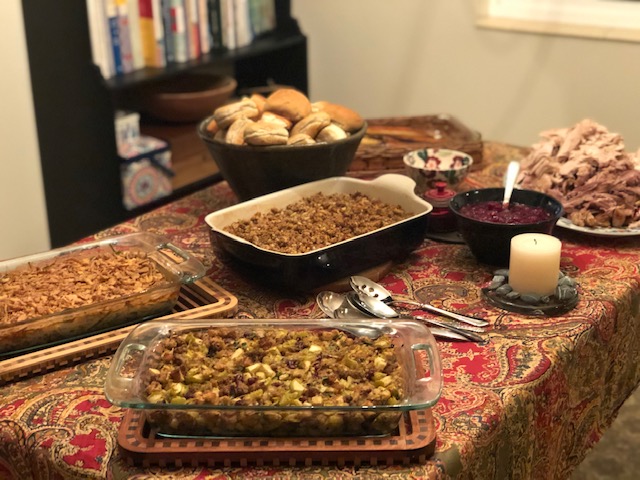
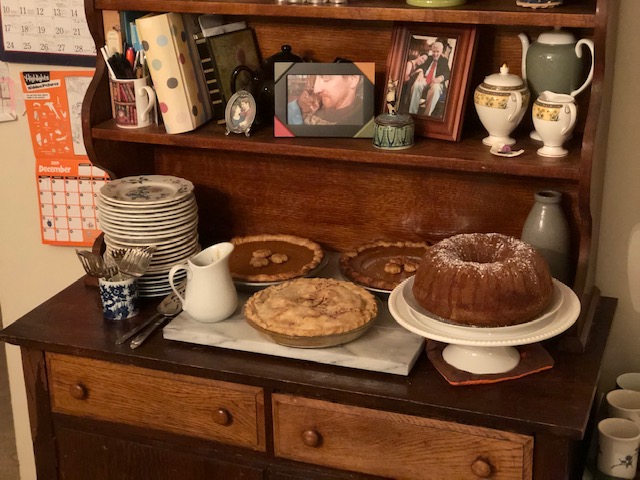
Every year we host Thanksgiving at our house. Our daughters absolutely love this tradition, and we spend two days getting ready. We don’t have a formal dining room, so we transform our living room….

IMG_3908

Into a dining room….

IMG_3898

Thanksgiving has just got to be my favorite holiday. For us, it means focusing on what we are grateful for, and sharing food with friends and family.

IMG_3895

Every year we ask ourselves, “Why don’t we do this more often?”, because it’s just such a wonderful feeling to be with our loved ones, and share in such a rich tradition. All the dishes bring back warm and wonderful memories to those of us that are older, and we are creating new memories for those of us that are younger. Our home is bustling with conversation, kids running around, and laughter.

IMG_3904

And after Thanksgiving, the house is quiet and serene. I love that too.

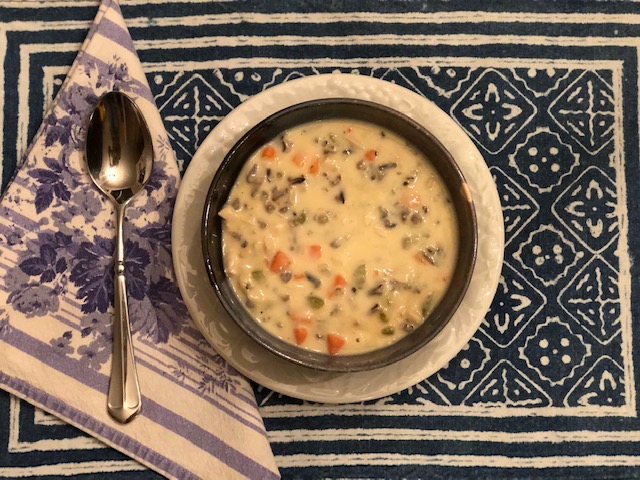
And there are lots of leftovers. Every year after Thanksgiving, I make Turkey Wild Rice Soup. I love wild rice. I love it in soups and salads, and I love it in this soup, which is very easy to make. This year I made turkey broth – just put all the turkey bones in a large stock pot with with water, onion, carrots, and celery. I let the stock slowly simmer overnight on the stove, so the stock is reduced and delicious the next day. BUT, you don’t need turkey stock to make this soup. Chicken broth works just as well. I can’t remember where I found this recipe, since I’ve been making it for so long. It’s pretty standard though. Make sure to plan a bit ahead for this… you will need to cook the wild rice first, which takes about an hour. You can chop the vegetables and shred the turkey into bite-size pieces while the rice is cooking.

Turkey Wild Rice Soup

  • 1/2 cup (1 stick) unsalted butter
  • 2 carrots, diced
  • 2 celery ribs, diced
  • 1 medium onion, chopped
  • 1/2 cup all-purpose flour
  • 4 cups (or more) chicken or turkey broth
  • 2 cups cooked wild rice
  • 2 cups cubed or shredded cooked turkey
  • 2 cups whole milk
  • 1 tsp dried parsley flakes
  • 1 tsp dried thyme (optional)
  • 1/2 tsp salt (or to taste)
  • 1/4 tsp freshly ground pepper
  1. In a dutch oven or heavy bottom soup pot, melt butter over medium heat. Add the carrots, celery, and onion. Cook and stir until tender.
  2. Stir in flour – cook until bubbly. Gradually whisk in the broth. Bring to a boil, stirring constantly. Cook and stir for 1 to 2 minutes or until thickened. Stir in the remaining ingredients and return to a boil. Reduce heat and simmer for 20 minutes, stirring occasionally. Add more broth as necessary, and add salt and pepper to taste. I like to serve this soup with a pepper grinder handy, because it is so good with lots of freshly cracked pepper.
  3. If you make this, and then have some the next day, you will need to have more broth on hand to add to the soup, as it thickens quite a bit overnight. Makes 6 to 8 servings… but at our house, it really only serves 4, because seconds….

IMG_3919

Posted in Comfort Food, Soups | 5 Comments

Flaky All-Butter Pie Crust

IMG_3430

Every year as Thanksgiving approaches, I panic. It’s time to start re-teaching myself how to make pie crust. It’s time to look at every blog post and every cookbook I can get my hands on, to see what the magic trick is to making the perfect pie crust. Flaky, but still tender. Easy to roll out. Easy to make, in every aspect… putting the dough together, making the little discs, and then finally, rolling it out.

IMG_3694

My helper.

What I finally came to is that I just have to make pie. Lots of pie. Or anything that requires a flaky crust.

Deep dish broccoli gruyère quiche.

After doing a ridiculous amount of research (and it’s not even my job to do all that research), I have discovered that the trick is this: make pie. Don’t be afraid. Just make pie. If the crust tears when rolling it out, patch it. If it looks ugly, don’t fret. If it ends up tough, better luck next time.

When the crust doesn’t cooperate, make a galette with it!

When I became obsessed with making the perfect flaky buttermilk biscuits, I made biscuits every week. I swapped biscuits with my neighbors, who were doing the same thing. I just kept trying. And I finally found the perfect recipe and technique that worked well for me. And I still make biscuits every Saturday for our family’s “Saturday Tradition”, which is a brunch with scrambled eggs and biscuits, and different kinds of jams. The eggs are really just an excuse to eat the biscuits and jam. And there are times when I make the biscuits that they don’t turn out quite as flaky, who knows why, but I don’t fret. Biscuits are just part of my repertoire now, and I am confident. Now I just need to do that with pie.

IMG_3695

My helper made the decorative shapes.

So here’s what I noticed: the basic recipe is the same. The ingredients, the amounts…. basically the same. There are a few variations, but nothing to get excited about. Just all-purpose flour (or pastry flour), salt, sugar (maybe), unsalted butter, and ice water. And maybe something like lemon juice or apple cider vinegar (my choice) or white vinegar or white wine vinegar. Any one of those will do just fine.

IMG_3829

And the technique [sigh]. Just choose one that you like best. Seriously. Do you want to mix in the butter by hand using a pastry cutter or two knives? Do you want to use a food processor? Do you want to smoosh the butter in with your finger tips? You can even use your Kitchenaid stand mixer (my choice lately, since I sometimes over mix or under mix when using a pastry cutter). But it really doesn’t matter. Just pick one and go with it.

My choice this season…

So here’s what I think I’m choosing for my go-to all-butter pie crust: in your mixing bowl, put 1 cup (4.5 ounces) pastry flour and 1.5 cups (6.75 ounces) all-purpose flour**, 1 teaspoon salt, and 1 teaspoon sugar (optional). Mix it with your tool of choice – pastry cutter, or paddle attachment if you are using your stand mixer, and put the tool into the bowl with the flour mixture. Put 1 Tablespoon Apple Cider Vinegar into a teeny bowl. Measure 1/2 cup of water in a measuring cup. Cut up 16 Tablespoons (two sticks) unsalted butter into 1/2 inch cubes. I make fast work of this by using my bench scraper, and cutting three lengthwise cuts, turning and cutting three lengthwise cuts again, and then cutting crosswise. Each butter pat will consist of nine cubes.

IMG_3828

First set of cuts.

Second set of cuts.

Cubed butter ready to go in a flash.

Now put the bowl with the flour mixture and paddle attachment into the freezer. Put the 2 sticks of cubed butter and the 1/2 cup of water in the freezer as well. Leave them in the freezer for 20 minutes, no longer. You don’t want the water to freeze. During that twenty minutes go have a cup of tea and check your email, or obsessively look at pie crust recipes online. You may say that you don’t have room in your freezer to do this. First, are you really going to eat everything that is in your freezer? I didn’t think so. Clean it out. Secondly, if you still don’t have room, maybe skip the mixing bowl, but still put the flour mixture in the freezer, maybe in a smaller container that will fit. And put any tools that you are planning on using in the freezer (paddle attachment, pastry cutter, etc). And definitely the water and the butter. MAKE ROOM IN THERE.

[And no, I’m not going to post a picture of my freezer here.]

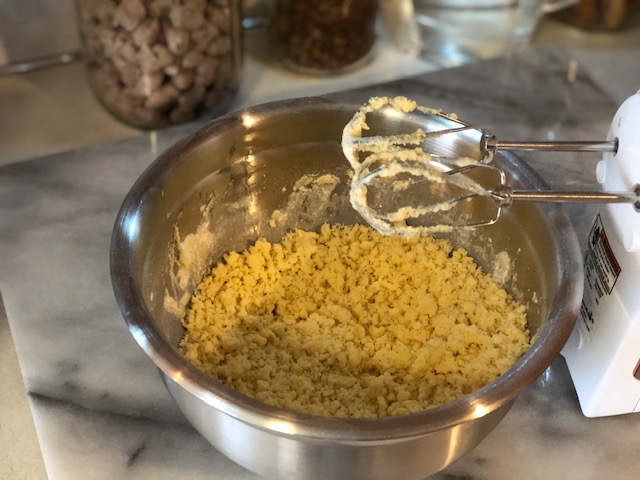
After twenty minutes, take everything out of the freezer. With your stand mixer on low speed, mix the flour for a second or two, then break apart the butter cubes and add them to the flour mixture a few at a time. Don’t worry about breaking each cube; they will break apart in the mixer. I break the pats into sets of three and throw them in. Keep mixing until all the butter is added, and the larger pieces of butter look like broken up pieces of walnuts, or large peas. With the mixer still going, drizzle in the vinegar, then drizzle in the ice water. I end up using all of it most of the time, but not always, so watch that dough like a hawk. Stop adding water (and turn off the mixer!) as soon as the dough starts to come together. The dough will look a bit shaggy. And maybe your mixer will start to groan. Grab some of the dough with your hand and squeeze it together. If it stays together when you poke at it, the dough is done. If it is still crumbly after you have squeezed it together, you need to add just a teeny bit more water.

IMG_3832

Now, here’s a technique that I like. Take two lengths of plastic wrap and set them out onto your work surface (I actually like to get this ready before taking the ingredients out of the freezer. I want everything to be ready.)

IMG_3831

Now dump half the dough onto each sheet of plastic wrap.

Working quickly-ish, pull up the corners of one of the plastic wrap sheets and bring them together to make a little bag of dough.

IMG_3835

Now, with cupped hands, squeeze the dough in its plastic wrap firmly into a mound. Squeeze several times quickly and firmly to make sure the dough is cohesive. The dough should come together nicely.

Form the dough into a 5″ wide disc while dough is still in the wrap, and then make sure to wrap the dough well. No need to get more wrap. The sheet you have should be enough. Put that disc in the fridge. Now repeat with the other pile of dough. Voilà! You now have two lovely discs of pie crust dough. You should be able to see bits of butter. Let them rest in the fridge for at least 30 minutes, but better a couple of hours or overnight.

IMG_3839

About rolling out the dough – your rolling pin should be heavy! The light weight ones just won’t do the trick. Take your disc of dough out of the fridge about 15 minutes before you want to roll it out. You want it to be pliable. If your kitchen is very warm, maybe 5 or 10 minutes will do. But don’t make the mistake that I often make, which is trying to roll out dough that is too cold. It will crack! Throw your pie pan into the freezer. And get a bag of frozen vegetables (I have one that is reserved specifically for this use) and place it on your work surface. This will chill the work surface while your dough is becoming pliable.

You can swoosh it around to get a wider area chilled.

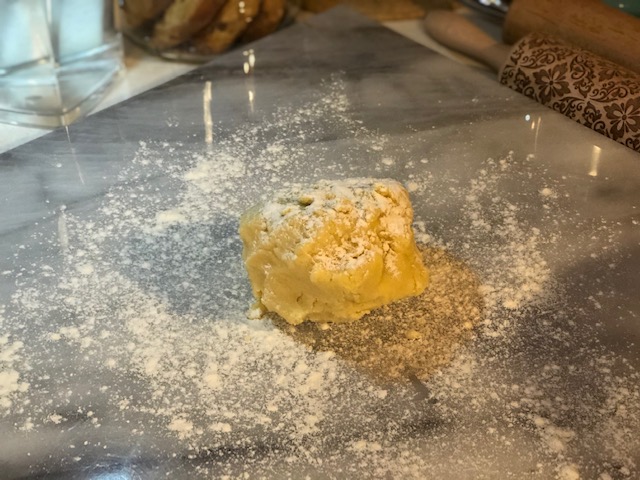
When dough is pliable, after about 10 to 15 minutes, put the frozen veggies back in the freezer and make sure your work surface is dry. It should be nice and cold! Use enough flour on your rolling out surface so that your dough doesn’t stick. Flour your rolling pin.

Not a lot of flour!

Flour your disc of dough also.

You are now ready to roll. He he….

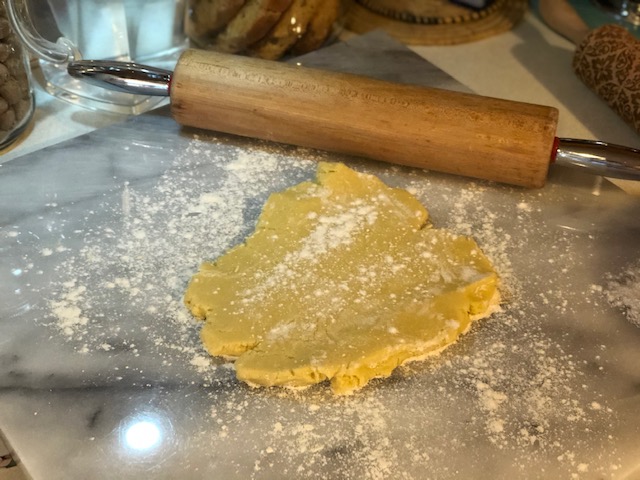
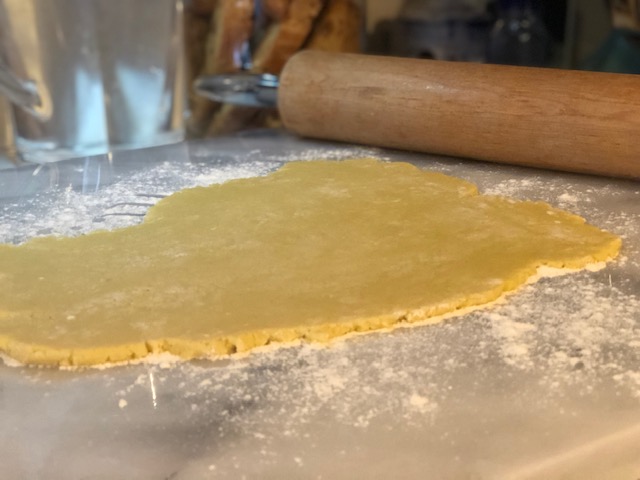
Start from the center and roll out, avoiding rolling past the edge of the dough. Give the disc a quarter turn every couple of rolls, and roll again. Keep doing this. Use your bench scraper to gently move it underneath the dough if it is sticking. Toss a teeny bit of flour underneath to keep it from sticking. Your dough is much less likely to stick if you have chilled your work surface well. This dough rolls out like a dream.

Once the dough is about 1/8″ in thickness, take a pizza cutter or knife and trim off the edges to make a nice round circle (this is optional). The circle should measure whatever your pie pan is from edge to edge, plus 3″. I always measure to make sure I’ve got the dough rolled out wide enough to do the job. 13″ is usually a good size, but measure please. Pull the cold pie pan out of the freezer. Fold your dough in half, then in half again, and place the dough in the pie pan with the middle fold-y corner thingy in the middle of the pie plate.

If the dough has a lot of extra flour on it, brush the extra flour off. Unfold and move the dough into the pan without stretching it. Leave about a 1/2″ overhang of dough past the rim, and trim off the rest. Fold the edges under.

Edges folded under.

Now crimp the edges with a fork or make a cute little design with your knuckles (if this is for a one-crust pie, such as pumpkin or pecan pie). Don’t use your finger tips, because you might tear the dough. Use your knuckles.

I have always had vein-y hands! X-Files comes to mind….

Cute!

Chill the crust in the fridge for at least a half hour before using. Or, if you are planning ahead, wrap the whole thing, pie plate and all, in plastic wrap (sorry about all the wrap), then aluminum foil, and put it in your freezer. You can use it whenever your are ready. This makes your pie making a breeze. This is, of course, for pies such as pumpkin or pecan. If you are making pie crust for a double crust pie, like apple pie, you can freeze the discs of dough, to be rolled out at a later date, if you like the idea of making ahead. I surely do. Just pull out the discs of dough the night before and let defrost in the refrigerator overnight.

Now, I have to tell you something about this pie crust odyssey I have been on. You know how they say to keep everything cold? Well, it really helps!!! It makes a huge difference. And all the resting periods in between? That makes a difference too. I’m one of those people that has to try it my own way first. Resting periods? Nah, I don’t have time for that. Keep everything cold? That’s going overboard. The chilling of the surface with frozen veggies? That’s ridiculous! But truly, truly, I say unto thee, Do these things, and thou shalt have a flaky, all-butter pie crust that is easy to roll out. That is all.

Update 3/16/21: I have a new favorite pie crust recipe that never fails. You can read about it here. Don’t get me wrong; this one that you are reading about now is really really good. But the newer one has more consistent results, and everyone loves it.

** I use 1 cup pastry flour, when I have it on hand, and 1.5 cups all-purpose flour, to make the crust more tender. I believe that pastry flour is key to the tenderness, so it’s really worth the extra trouble to have it in your flour arsenal.

***This recipe makes two standard 9 inch pie crusts. This recipe does not make enough for two 9 inch deep dish pie crusts.


Posted in Comfort Food, Fun in the kitchen! | 5 Comments