Old School Peanut Butter Cookies

I know I wrote about peanut butter cookies not too long ago, and after I did, I didn’t make them again for quite some time. And when I did, I realized that although they were good, they still weren’t really what I was looking for. Trying to recreate a childhood food memory is so challenging! In talking with my sister Jane, we both agreed that those peanut butter cookies we used to enjoy were probably made with Crisco. It was very popular back then. She and I both shuddered, but the truth is, Crisco has its place, and it creates a texture that is hard to replicate using butter. It’s just true!

Dough is rich and crumbly.

So I opened up my mom’s Joy of Cooking to the peanut butter cookie recipe as a starting place. By the way, my mom’s Joy of Cooking is a cherished family heirloom. It is what my mom and we kids used for pretty much everything. It is the 1943 edition, and was given to my mom as a gift when she was in college. It is even signed by Irma Rombauer herself.

It is a gem, scribble marks included.

Although this book is falling apart, I don’t believe it should be treated as a museum piece. I absolutely love leafing through the pages and looking at the old recipes. I love coming across notes written by my mom. It’s as though she’s talking to me in one of my favorite languages: food! In the back, there are pages and pages of all kinds of notes, recipes, and even menu planning for dinner parties. I never tire of looking at them.

A treasure trove of my mother’s notes and favorite recipes.

At the beginning of each section is beautiful, whimsical silhouette-style artwork; so very lovely and old world.

I always love reading the “about” sections, so chock full of good information.

So even though I started out with the Joy of Cooking recipe (which uses butter), I decided to give it a go with Crisco. I also tweaked the measurements here and there, and I even added a special ingredient – smoky paprika! –  inspired by Sister Pie’s Peanut Butter Paprika Cookies. 

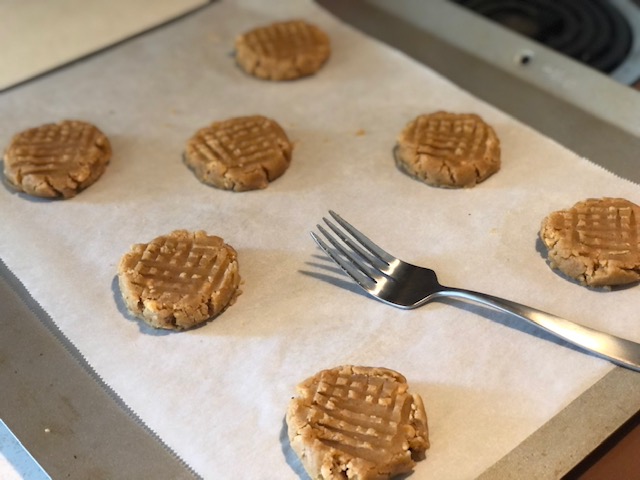
Love that classic criss-cross pattern.

I made these cookies again yesterday, just to make sure I had the details right. And I double checked oven temp and bake time. We had some plumbers over working on a pesky leak, so being in my kitchen seemed like the right thing to do. Even the cats had to stay out of their way.

The cats in their heated baskets are being very cooperative.

These cookies have a delightfully crunchy outer edge, they are rich like shortbread, and the center is nice and chewy… and the flavor is intensely peanut buttery. These are it!

Old School Peanut Butter Cookies

(Adapted from the 1942 Joy of Cooking recipe)

  • 1/3 cup (64 grams) Crisco*
  • 3/4 cup (198 grams) crunchy peanut butter (Jif or Skippy please**)
  • 1/2 cup (100 grams) light brown sugar, packed
  • 1/2 cup (100 grams) granulated sugar
  • 1 teaspoon vanilla extract
  • 1 large egg
  • 1 1/2 cup (180 grams) all-purpose flour
  • 1 teaspoon kosher salt
  • 1 teaspoon baking soda
  • 1/2 teaspoon smoky paprika*** (optional)
  1. Preheat oven to 350°, and line two baking sheets with parchment paper.
  2. In a small bowl, mix together the flour, salt, baking soda, and paprika. Set aside.
  3. In a large bowl, beat together the Crisco, peanut butter, and sugars until lightened in color and creamy.
  4. Beat in the egg and vanilla, scraping down the sides of the bowl to make sure everything is well incorporated.
  5. Add in the flour mixture and stir slowly, just until the flour is absorbed.
  6. Make 1 1/2 tablespoon sized balls of dough (a cookie scoop makes this easy) and place on cookie sheet 2 inches apart. Flatten them just a little bit with your fingers to make chubby discs.
  7. Make criss-cross pattern in tops of cookies with a fork. Don’t press down very hard; just enough to make the design. You want the cookies to be at least 1/2 inch thick, if not a bit more.
  8. Bake one tray at a time on the center rack of your preheated 350° oven for 10 to 12 minutes, or until the edges of the cookies begin to brown. Remove from oven and let cookies rest on cookie sheet for 5 minutes before transferring to cooling rack to cool completely. This recipe makes about 1 1/2 dozen cookies. Enjoy!

Notes:

*I have tried many different variations of this recipe. I really wanted to use butter, but it wasn’t the right texture. And just to be absolutely sure, I even made them with browned butter. Nope. It has to be Crisco.

**The peanut butter needs to be either Jif or Skippy (a texture and flavor thing). Using a natural peanut butter (just peanuts and salt) creates a denser cookie. Remember, these are old school peanut butter cookies.

***The smoky paprika adds a subtle earthiness to the flavor. Definitely optional. If in doubt, try adding just half the called for amount.

Apparently, my mom liked them baked for just 10 minutes. Thanks, Mom!

My mom during her college days, the winter she received her Joy of Cooking.


Posted in Cookies | 9 Comments

Spinach Pesto Muffins

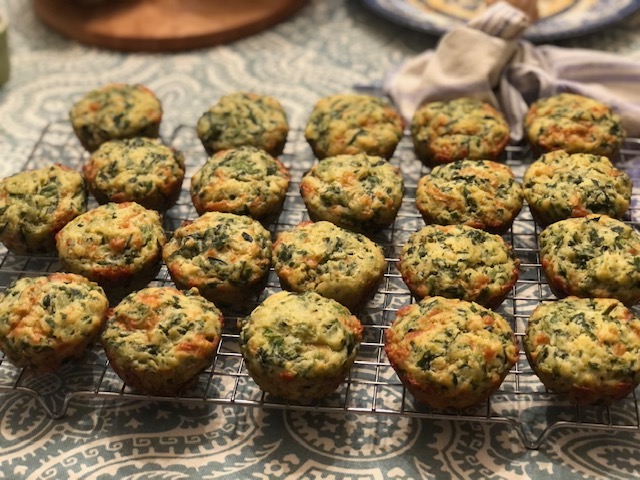
I’ve been obsessed with these muffins for a while now. My friend Susanne (pronounced soo-sah-nah) makes them every time we go over to her house for dinner. I try to act casual and not eat too many, since they are a side dish, but sometimes I can’t help myself.

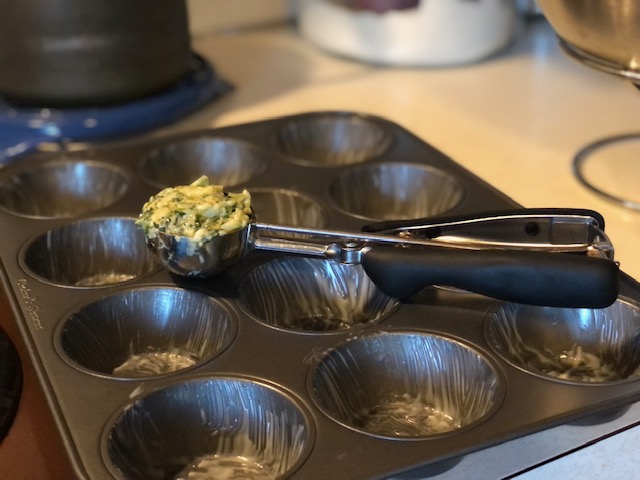
A large scoop makes portioning easy!

I have asked Susanne for the recipe for these delicious muffins every time she makes them, and she gives it to me every time. Well, I finally made them!!! The first thing I noticed in looking at the recipe was that the flour (3 cups) also has a weight measurement – 470 grams!!!! I checked with Susanne and she said that she follows the recipe as written, but I didn’t press to find out whether she measures using her measuring cups or her kitchen scale.

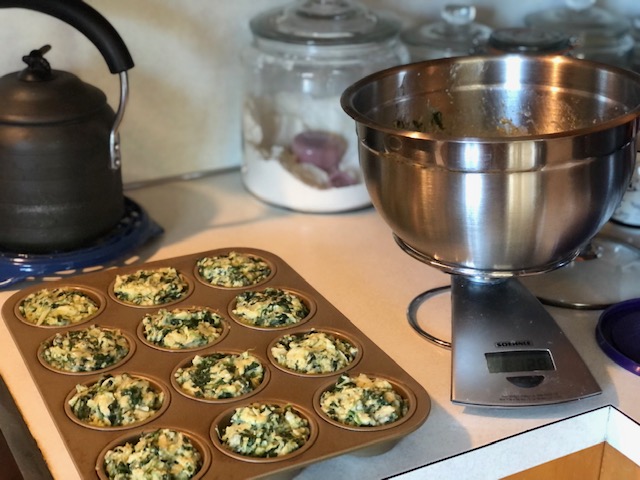
Muffins tins filled to the brim with batter.

So I made the muffins, using my scale. The dough was very stiff! But I followed the recipe pretty much as written, only using a different kind of cheese, and the muffins were delicious, and very sturdy. Oh, and I used a little more spinach than the recipe called for. Not a big deal. We had friends over, and they loved the muffins and wanted the recipe!

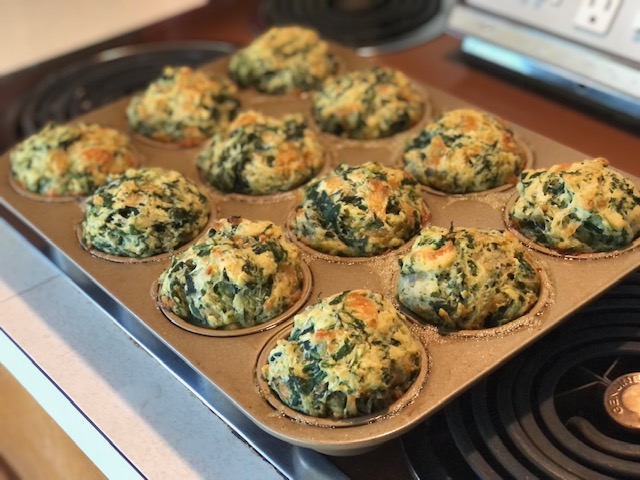
First batch – so very good!

The next time I made them, I decided I would cram as much flour into my measuring cup as I possibly could (such an unusual thing for me to do) to see if three cups of all-purpose flour could ever really weigh 470 grams, and the answer is no. When I packed the cup like crazy, I ended up with about 135 grams of flour per cup, give or take a few. So the total amount of flour for three cups was 400 grams, not 470. The second batch was also delicious, and a bit softer, since I used a little less flour. And there was another change: I decided to make smaller muffins, at the request of my younger daughter, so they would work better for a lunch snack to take to school. So I made 24 small muffins instead of 12 large ones, and just baked them for a few minutes less time.

These are the smaller ones that fit nicely into a lunch box.

Either way, both batches were so very good, and I will be making these again and again.

Spinach Pesto Muffins

  • 3 cups packed all-purpose flour (400 grams)
  • 1 tablespoon baking powder
  • 1 scant teaspoon salt (adjust, depending on how salty the cheese is)
  • 3 large eggs, beaten
  • 2/3 cup olive oil
  • 1 cup whole milk
  • 1 package (10 oz or a bit more) frozen chopped spinach, thawed and squeezed dry
  • 1/2 cup favorite pesto*
  • 1 cup shredded gruyère cheese**
  1. Preheat oven to 375° and grease 12 standard muffin cups with butter.
  2. In a large bowl, stir together flour, salt, and baking powder. Set aside.
  3. In a medium bowl, whisk together the eggs, then whisk in the oil and milk. Stir in the spinach and stir until well blended and the spinach is no longer in chunks.
  4. Add spinach mixture to flour mixture and stir just until evenly incorporated. Fold in pesto and cheese. Don’t over-mix!
  5. Fill prepared muffin cups (if making 12 muffins, the batter will fill the cups; if making 24 muffins, batter will fill only half way). Bake on center rack in oven for 20 to 25 minutes, until golden, dry, and springy to the touch. Really, use your finger – the muffin should spring back. Remove from oven and let rest in muffin tin for about 5 minutes or so, then transfer muffins to cooling rack to cool. I think these are best when still a bit warm from the oven, but they are also delicious at room temperature. Makes 12 large muffins, or 24 small muffins. Enjoy!***

Notes:

*Use a pesto that you really like, as the pesto flavor is quite prominent.

**I use a cheddar-gruyère blend. I think straight gruyère would be nice also, but it can be a little strong for my kids, so I opted for something a little more mellow. The original recipe calls for mozzarella, but I wanted something with more of a kick. Susanne uses Jarlsberg. So really, choose whatever you think sounds good!

***The leftovers, if there are any, can be stored in an airtight container in the refrigerator and reheated in a 350° oven for five minutes.

Posted in Side Dishes, Snacks | 3 Comments

Angela’s Favorite Chewy Chocolate Chip Cookies

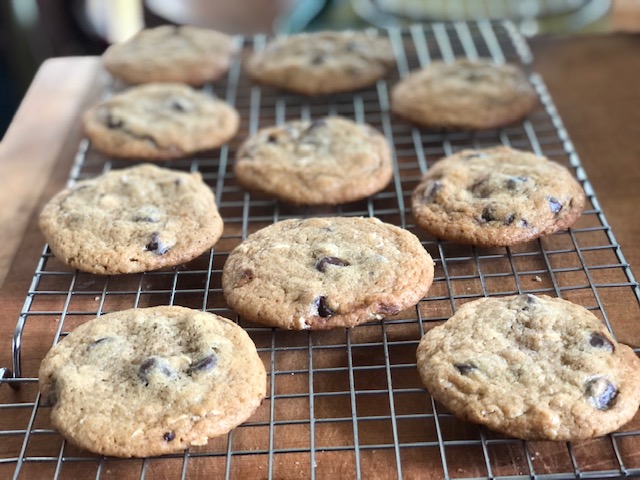
I know I just recently wrote about chocolate chip cookies, but you know I have to keep experimenting, and these are my latest favorites. They are dense and chewy and delicious! I mean, they are really chewy. The method is a little questionable, so I don’t expect anyone to try this recipe, but if I don’t blog about it, my little piece of paper where I wrote everything down is likely to disappear and then the recipe will be lost forever.

It’s a pretty standard recipe, with oats added for a little chew, (but not so many as to make it taste like an oatmeal cookie), and also some bread flour, lest I forget, because it’s not even written down! And here is what happened when I first made these cookies. I scooped them out and baked one tray of cookies right away. I had another tray of scooped out cookie dough waiting to go, and I was about ready to put it in the oven, when all of a sudden I realized I had to be somewhere, so I dashed out of the house. Several hours later, I got back home and realized that the cookie dough had been sitting at room temp all that time. Luckily, it was not a hot day, so I baked that second tray of cookies, and oh my!! There was quite a difference in texture between the first tray and the second one.

I know what you might be thinking. It’s pretty standard to let cookie dough rest in the fridge for a couple of hours before using. That makes them not spread as much, and the results are overall much better. But this is not that. The cookie dough was at room temperature. After the second tray went in, I put the rest of the cookie dough in the fridge, where it stayed for a couple of days. I thought to myself that the cookies would be even better if I used cold cookie dough. Not the case. I tried it, and they were not as good. They were missing the wonderful texture. So strange! I was flummoxed.

Next day I took the bowl of remaining cookie dough and put it on top of the fridge to make room for something else, and forgot to put the bowl back in the fridge! Later that day, I scooped out the last of the cookie dough which was at room temperature, and baked it up. The cookies were better than ever. So chewy, kind of dense, and on the bottom kind of caramelized sugar or something that I can’t even describe. Of course, now that I am telling you this, I am doubting that this little experiment can be replicated. So I’m gonna make these cookies all over again, just to make sure it wasn’t a fluke. And I will do this before I publish this post, I promise!

Update! 11/11/2025 – I have found that these cookies come out just as nicely (and a smidge taller) if you just go ahead and pre-scoop and chill the dough for at least two hours, and then bake at 375° for 11 minutes, or until the edges have browned but the tops still look slightly pale and glisten-y. And these are still my favorites!

Angela’s Favorite Chewy Chocolate Chip Cookies

  • 2 2/3 cups (320 grams) all-purpose flour*
  • 1/4 cup, heaping, (30 grams) old fashioned rolled oats (NOT instant oats)
  • 1 teaspoon (6 grams) kosher salt
  • 1 teaspoon baking soda
  • 1 cup (2 sticks, or 227 grams) unsalted butter at room temperature
  • 3/4 cup (150 grams) granulated sugar
  • 3/4 cup (150 grams) packed light brown sugar
  • 1 teaspoon vanilla
  • 2 large eggs
  • 1 package (340 grams) semi-sweet chocolate chips**
  1. In a medium bowl, mix flour, oats, salt, and baking soda. Set aside.
  2. In a large bowl, mix together the butter and sugars, and beat with a hand mixer or stand mixer for about two minutes, until lighter in color and creamy.
  3. Beat in the eggs one at a time, then beat in the vanilla. Scrape the sides of the bowl to make sure everything is well incorporated.
  4. Add the flour mixture to the wet ingredients and mix on low speed just until the flour has been incorporated. Use a spatula to scrape down the sides of the bowl and do a final mixing by hand.
  5. Stir in the chocolate chips.
  6. Cover the bowl and let the dough rest at room temperature for one to two hours (do this at your own risk… I wouldn’t recommend it if it’s a particularly hot day, or if it’s hot in your kitchen). At this point you have a couple of choices: you can either bake up the cookies, or you can cover the bowl with plastic wrap and refrigerate for up to three days (I think the cookies come out better when you refrigerate the dough after letting it rest at room temp). When you are ready to bake cookies, take the bowl out and let the cookie dough come back to room temperature… an hour is probably sufficient.***
  7. Once the dough has rested, line a couple of sheet pans**** with parchment paper and preheat your oven to 375° for at least ten minutes. Once oven is good and hot, scoop out cookie dough balls (about 1 1/2 tablespoons of dough per cookie) and place nine on each tray, two inches apart. Why not twelve? Well, I think it works better to have fewer cookies to avoid having the cookies touch each other when they spread. You don’t want to lose even one teeny bit of crispy edge.
  8. Bake the cookies one tray at a time on center rack of preheated oven for about nine minutes, or until the edges have browned and the tops look mostly baked, but might still have a tinge of glisten to them. You really don’t want to over-bake these cookies.
  9. Let the cookies cool on the tray for about four minutes, then transfer to cooling rack to finish cooling. I always set a timer for this, because if you leave the cookies on the tray for too long, the bottoms will not be crisp.
  10. Enjoy! These cookies are best eaten the day they are baked, for best texture. Makes approximately 2 1/2 dozen cookies.

Notes:

*If you are not using a kitchen scale, stir your flour to aerate and fluff it up before lightly sprinkling your flour by the spoonful into measuring cup, and use the straight edge of a knife to level the flour. And by the way, no need to use bread flour. I just use King Arthur all-purpose flour, which has a high enough protein content that it adds that nice chew. If you use a flour such as Gold Medal, which has a lower protein content, your cookies will be softer.

**Last night I decided to get fancy with these, so I chopped some good quality milk chocolate into smallish shards, and added about 1/2 cup of them to the dough in addition to the bag of semi-sweet chocolate chips. I have no regrets.

***About leaving the cookie dough out at room temperature… if this feels uncomfortable for you, just don’t do it. But I have to say that I am pretty convinced that this is exactly what makes these cookies so wonderful. Here is my theory: when you let the dough rest at room temperature, the flour and oats absorb any excess moisture, making for a dense, chewy cookie. If you put the dough in the fridge right away, the butter will firm up, not allowing for full absorption of moisture. If you bake the cookies right away, same thing – the moisture is in the cookie and the flour hasn’t had time to absorb it. This is just a theory! I am not a scientist, but I do know that there is a distinct difference between waiting and not waiting, as well as baking the cookies at room temp or from the fridge.

****For best results, use a heavy gauge aluminum cookie sheet for even baking and heat distribution.

Posted in Cookies | 3 Comments

Egg Salad

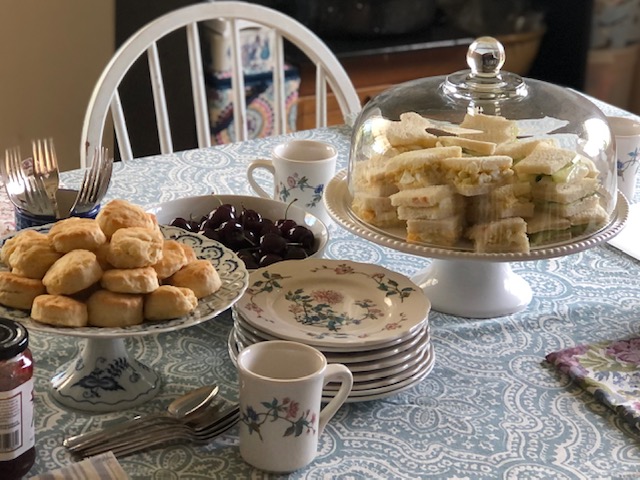
Yesterday was my mother-in-law Barb’s birthday. We had her over to celebrate; the girls and I prepared an English tea, which was SO fun! There were cream biscuits with jams and lemon curd, fresh local cherries, cucumber sandwiches and egg salad sandwiches with crusts cut off and cut into little squares.

Mara, Millie, birthday-girl-Barb, and me.

Everything was lovely and yummy, and the egg salad was so good that I had to make it again today! Egg salad is pretty easy to make, so you might be wondering why I am writing about it. Well, here are a few reasons: do you dread making hard boiled eggs because sometimes they are chalky or they get that weird dark color between the yolks and the whites? Do you also dread peeling hard boiled eggs? Hopefully I’ve got some tricks to share that will make it easier.

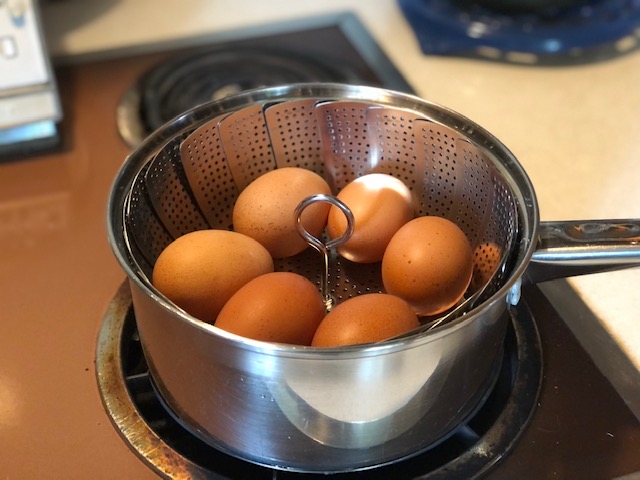
Pretend like there is slowly simmering water in the pot!

This recipe calls for six hard boiled eggs. Here’s how I do the boiling part: bring a pot of water to a slow simmer. Place six extra large eggs (inspect them first to make sure none of them are cracked) in a vegetable steamer and slowly insert the steamer into the pot of simmering water. There should be enough water to cover the eggs. When the water comes back to a very slow simmer – this should happen quickly – set your timer for 16 minutes. The slow simmer should look like a bubble here or there coming to the surface of the water. You want to avoid a full boil, which will overcook the eggs and leave them rubbery. At the 16 minute mark, remove the steamer and eggs and plunge the whole thing into a large bowl of ice water to stop the cooking and chill the eggs. You can let them sit there for a long time, but I’d say at least fifteen minutes. Longer is better.

Yes, I’m gloating about these perfectly peeled hard boiled eggs!

When you are ready to get started with the peeling, take one of the eggs and crack it against a counter at the large end of the egg – that is where there is an air pocket, so you will crack the shell without cracking the egg inside. Take the egg and peel it under cold running water. This makes everything a lot easier. The shell hopefully will come off easily in large-ish pieces. Place the peeled eggs in a medium sized bowl.

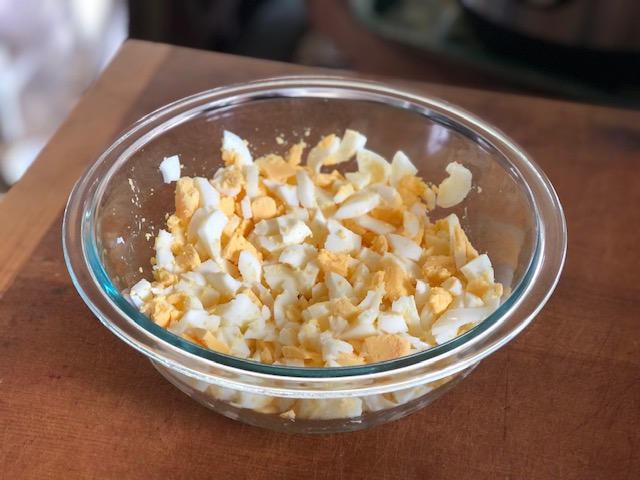
This is chopped finely enough.

To make the chopping part easier, I just hold the egg in my hand directly over the bowl that contains all of the eggs. Using a small paring knife, I cut the egg into quarters lengthwise, then slice it directly into the bowl. Repeat with all the eggs. Then you can take the knife and cut up any larger remaining pieces of egg that you see in the bowl. This is just a lot easier than trying to chop up a hard boiled egg on a cutting board. And no, I don’t have an egg slicer. I am the egg slicer.

This is all you need!

Add 1/3 cup of Hellman’s or Best mayonnaise and stir to coat the egg. Then add a pinch of kosher salt (the larger grains are much nicer than using table salt) and some freshly ground pepper, and several dashes of curry powder. We use curry a lot around here, so it has a place of honor on our table next to the salt and pepper.

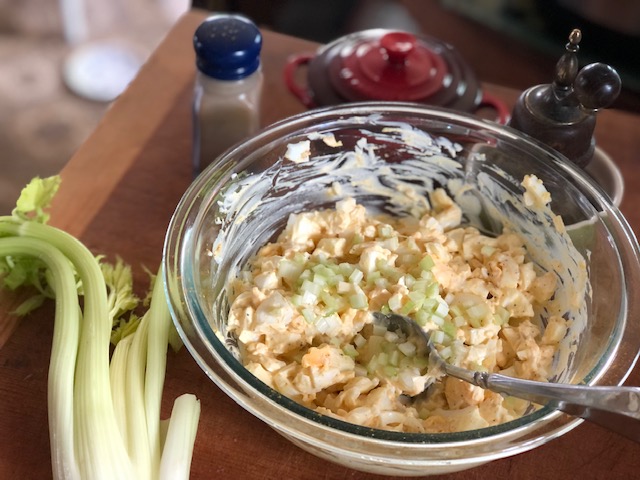
I like a little crunch in my egg salad; a bit of celery does the trick.

Celery is optional, and if you choose to use it, use one of the tender inner ribs for milder flavor. I used one very small rib diced as finely as possible.

Egg Salad

(Adapted from the Joy of Cooking)

  • 6 extra large hard boiled eggs, chilled in ice water (read the post!)
  • 1/3 cup Hellman’s or Best mayonnaise
  • 1 pinch kosher salt and freshly ground pepper to taste
  • Several dashes curry powder (optional)
  • 1 inner rib of celery, finely diced (optional)
  1. Peel the eggs under cold running water, then finely chop into a medium bowl.
  2. Add the mayonnaise, salt, pepper, curry and celery (if using) and stir to combine.
  3. Serve right away as a sandwich on high quality soft white bread, such as potato bread or buttermilk bread. Don’t add anything else to the sandwich: just bread and egg salad. You don’t want anything to interfere with this perfect combination. My friend Deb says she likes to serve it on a toasted bagel, which sounds amazing. I think the flavor of the egg salad is best at room temperature, or only slightly chilled. If you make this in advance, store in the fridge, but allow to come almost to room temperature before serving. Makes enough for two to three sandwiches. Enjoy!

Posted in Comfort Food, Fun in the kitchen! | 2 Comments

Crispy Chewy Chocolate Chip Cookies (Twice Baked)

I am sometimes tortured by always wanting to experiment with recipes. Not sure I really need another chocolate chip cookie recipe, but this isn’t so much about a recipe as it is about a baking method.

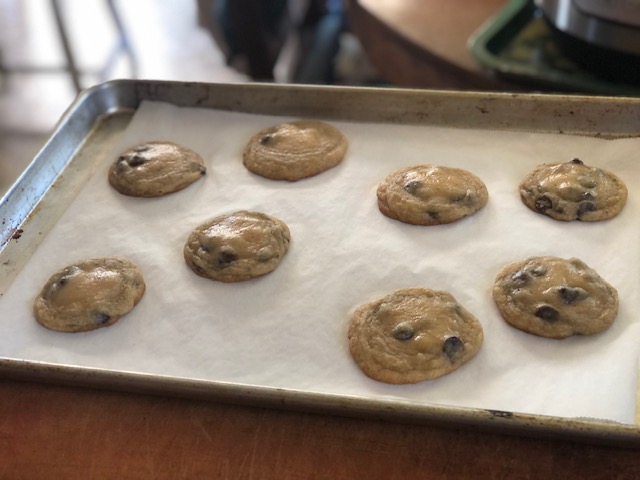
Bottoms are nice and crispy and evenly baked.

Warning: this cookie requires freezing the dough, so it is definitely a make ahead kind of cookie dough, that then turns into an I-need-a-cookie-now kind of cookie.

There is something that has recently happened a couple of times by mistake, and I realize that I kind of like the result of the mistake! Is it an extra couple of steps that are too much of a pain? Maybe. But if you want a cookie that is crispy but but not over-baked on the bottom and gooey-chewy in the center without being under-baked, and an even bake overall, stay with me.

This is what I’m after.

I often will make cookie dough and scoop it into cookie dough balls, which I freeze and keep for later. That way, whenever we feel like having freshly baked cookies, I grab a few out of the freezer and bake them up. Sometimes, because they are frozen, they take longer to bake, so I’m always just winging it, and keeping an eye on the cookies so they don’t over-bake. But since they are frozen, often it’s the other thing that is the problem: the center of the cookie doesn’t get baked enough.

Under-baked!

This very thing happened last night while we were watching Bridgerton, hehe… we finally got sucked in. I put some cookies in the oven to bake, and then ten minutes later pulled them out of the oven thinking they would continue baking on the cookie sheet. We have to pause the show every time I run into the kitchen, so I try to keep these kitchen runs to a minimum. After a while, I went back to inspect the cookies, and they were definitely under-baked in the center. Gooey is one thing, but under-baked is another. No thank you. So I cranked the oven up to 390° and put the cookies back in for another 6 minutes, I mean, what did I have to lose? When I pulled the cookies out the second time, they looked like they were perhaps over-baked, which equals cake-y, which I hate.

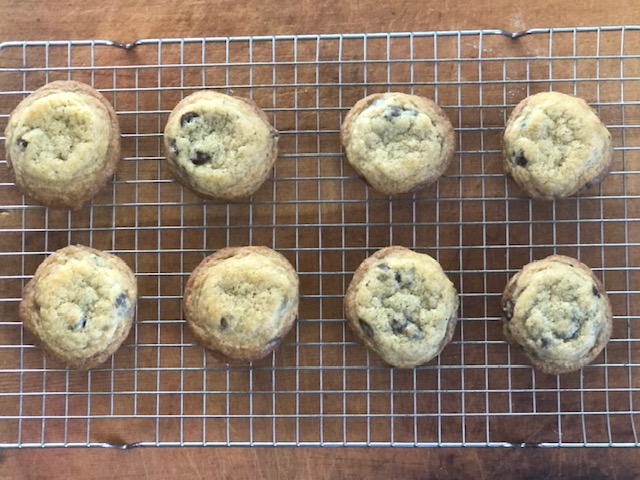
Do these look over-baked?

But somehow they were not cake-y at all! They were crispy on the bottom, and evenly gooey-chewy on the top! Why did this happen? Here is what I think: when I pulled the cookies out of the oven the first time, the outer part of the cookies cooled down and stopped baking, while the cooler center of the cookie had a little time to evenly disburse that coolness. So when I popped the cookies back in for the final blast of heat, the cookies were cool again, and got baked just enough while crisping the outside. No cakeyness! Is cakeyness a word? I think you know what I mean. I’m not sure I’m going to do this every time, but I am here to tell you that I’ve made this mistake a couple of times now, and I have not been disappointed. So here is the recipe, which is a standard chocolate chip cookie recipe*, along with directions on how you, too, can make the same mistake.

Crispy Chewy Chocolate Chip Cookies

(Adapted from the Tollhouse recipe)

  • 2 3/4 cups all-purpose flour (330 grams)
  • 1 teaspoon baking soda
  • 1 teaspoon kosher salt (double if using Diamond brand)
  • 2 sticks unsalted butter at room temperature
  • 3/4 cup granulated sugar (150 grams)
  • 3/4 cup brown sugar, packed (150 grams)
  • 1 teaspoon vanilla extract
  • 2 eggs
  • 2 cups semi-sweet chocolate chips (330 grams) or 1 bag, which is a bit more
  1. Line a cookie sheet with parchment paper and set aside.
  2. In a medium bowl, whisk together the flour, baking soda, and salt. Set aside.
  3. In a large bowl or bowl of a stand mixer, beat together the sugars and the butter until light and creamy, about 3 minutes. Use a hand mixer if you are not using a stand mixer.
  4. Beat the eggs in one at a time, scraping down the sides of the bowl between each addition.
  5. Beat in the vanilla.
  6. Dump the flour mixture into the bowl and mix on low speed just until the flour is well incorporated.
  7. Stir in the chocolate chips with a wooden spoon.
  8. With a 1 1/2 Tablespoon cookie scoop (or you can eyeball this), scoop all of the dough into balls and place on the parchment lined cookie sheet. They can be very close together, since this is just for freezing purposes.
  9. Place the tray of dough balls in your freezer and freeze for a couple of hours before transferring the frozen dough balls into a ziplock freezer bag. Press as much air out of the bag as you can, and seal well. These dough balls can stay in your freezer for a couple of months and still be good for baking, if they ever last that long.
  10. Imagine time has passed, like maybe even weeks. When the mood strikes, preheat your oven to 375° and line a cookie sheet with parchment paper.
  11. Once your oven is preheated, place the frozen cookie dough balls on lined cookie sheet at least two inches apart.
  12. Bake on center rack of your preheated 375° oven for about ten minutes; the cookies should look melted and flattened out, but not cooked on top. Remove the tray of cookies from the oven and let cookies cool on the cookie sheet for ten minutes. Leave the oven on! You can go check your email or continue watching your show while you wait for your oven to get hotter and your cookies to cool a bit.
  13. After ten minutes (it’s okay if it’s a bit longer than ten minutes), put the cookies back into your already hot oven, turn the heat up to 390° or so, and bake for about 5 minutes, or until cookies start to look slightly dark brown around the edges, and the tops begin to take on a teeny bit of color. Remove from oven and let cookies cool on the cookie sheet for five minutes before transferring to a cooling rack to cool completely.
  14. Enjoy!

Note: *You can probably try this technique with any favorite chocolate chip cookie recipe you regularly use. If you try it, let me know what you think!

Posted in Cookies, Fun in the kitchen! | 3 Comments

Jane’s Hippie Coleslaw

You may wonder, if you know me, how it has come to be that I am writing about coleslaw. I consider myself someone that doesn’t even like coleslaw. I have avoided it ever since I was a kid. Maybe it’s because I also didn’t like mayonnaise as a kid either. Even now, if I put mayo on a sandwich, it has to be a very thin layer that vanishes into the bread. I don’t want to see any white globs. So here is what happened, if you must know.

Let’s get this show on the road.

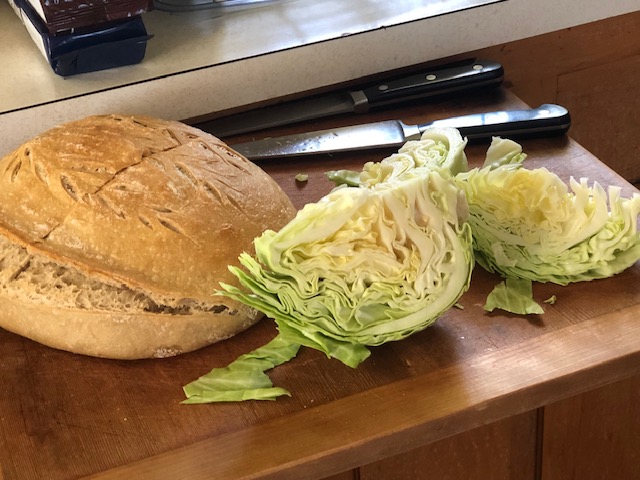
At our favorite neighborhood Japanese restaurant, Kozue, they serve finely shredded cabbage drizzled with some sort of white dressing, and it is oddly one of my very favorite things they serve. I will order a menu item specifically because that cabbage salad comes with it. So I have tried to mimic what they do, minus the white dressing… because mayonnaise… and it’s just not the same. So today while I was at Trader Joe’s, I noticed that they sell small bags of finely shredded cabbage, and for the same price, you can get an entire head of cabbage! So I grabbed the head of cabbage and threw it in my basket. Honestly, this entire thing kind of sneaked up on me.

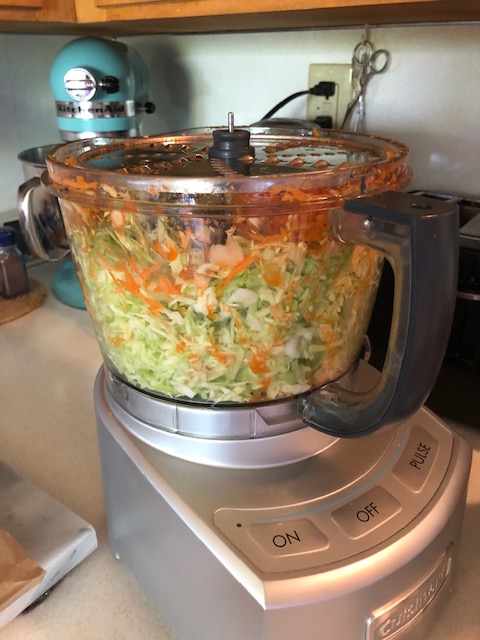
I don’t use my food processor very often!

When I got home and put away the groceries, I started looking up recipes for coleslaw online. It’s like I was possessed! I found one that got lots of great reviews on allrecipes.com. I read through a lot of the reviews and found that people had opinions about this or that, so I jotted down what I thought might be a good version based on reviews. I liked the addition of Dijon mustard and celery seed. But after pulling out my behemoth of a food processor and shredding the cabbage and some carrots, I realized I didn’t feel like experimenting. I wanted something that would be delicious right away, something that was tried and true by someone that I trust. It was time to talk with my sister Jane, who lives on the other side of the country. I remembered her telling me that she makes a “hippie coleslaw”, and I needed to know more!

Jane’s recipe.

I loved seeing Jane’s recipe. It was scribbled on (in different colored ink, I might add) and cryptic, as all good recipes should be. I was also gratified to see that her hippie mix included mustard and celery seed! The allrecipes recipe was heavy on the sugar, and I had halved the sugar with the version that I had jotted down. Well, Jane’s used even less sugar! She also warned me against using apple cider vinegar; just plain old white vinegar is the way to go. Jane’s version also had less salt and less pepper and less celery seed. I decided to follow it almost exactly as written, but I did use Dijon mustard instead of ground mustard, as I really do love anything with Dijon mustard and lemon.

A perfect summery side dish.

It is absolutely delicious. I cannot believe it. How have I been avoiding coleslaw my entire life??? I am so glad I followed Jane’s recipe! The seasoning is spot on; it doesn’t overpower the flavor of the cabbage and carrots, while still being delicately tangy, sweet, and savory. Jane recommends letting the coleslaw rest overnight in the fridge, mixing it two or three times, to let the flavors mingle. But to be honest, immediately after mixing everything together, I taste-tested it, and then taste-tested it again and again, until I finally surrendered and served myself a bowl-full, it was so good! So here is Jane’s recipe for you to try out. I hope you like it as much as I do!

Jane’s Hippie Coleslaw

  • 1 medium head of green cabbage, thinly sliced (maybe eight cups or so)
  • 1 medium sized carrot*, peeled and shredded
  • 1/2 cup good quality mayonnaise**
  • 1 1/2 teaspoons white sugar
  • 1 1/2 tablespoons freshly squeezed and strained lemon juice
  • 1 tablespoon white vinegar (don’t skimp)
  • 2 teaspoons Dijon mustard
  • Heaping 1/4 teaspoon kosher salt
  • 1/4 teaspoon freshly ground black pepper
  • 1/2 teaspoon celery seed
  1. Using a food processor or a sharp knife, slice cabbage finely, and peel and shred carrots with the larger holes on shredder. You want to end up with about 8 cups, more or less.
  2. In a large bowl, mix the mayonnaise, sugar, lemon juice, vinegar, mustard, salt, pepper, and celery seed. Add the cabbage and carrots and mix well. Cover and store in fridge. You can serve right away, or you can let it rest overnight in fridge to let the flavors mingle, mixing a few times. The flavor mellows overnight, but either way it is delicious. Enjoy!

Notes:

* If you like a sweeter coleslaw, you can add more carrots, but be aware that the extra carrots will change the flavor and the color of the dressing. Jane says to maybe use only 1/3 of a carrot… you decide.

**Jane uses vegan avocado mayonnaise, which is great if you would like your coleslaw to be vegan. I just use Best Mayonnaise (or Hellman’s if you are in other parts of the country). In any case, use a mayonnaise that has a good flavor that you like.

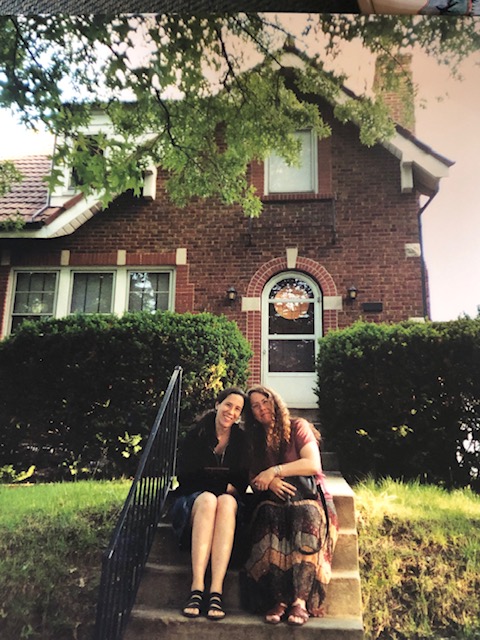
And just for fun, here are a few pictures of me and Jane.

I’m on the left, Jane on the right.

Me and Jane in front of our childhood home.

Posted in Comfort Food, Dairy-free, Side Dishes, vegan | 5 Comments

Easy Sourdough Starter Maintenance

I posted about sourdough starter maintenance a few years ago, but wanted to write a new post that reflects what I do now. I have completely simplified, and don’t like to have discard. I always keep my starter in the fridge, in a 16 ounce, straight sided Ball or Kerr canning jar. I usually keep between 30 and 40 grams, which is a little less than a quarter cup.

30 grams is not a lot, but it’s enough to get you started, haha.

If I know I want to bake a loaf of bread, the night before, I pull my jar of starter out of the fridge just before bedtime. If my recipe calls for 80 grams of starter, for example, I will add to my jar: 50 grams of water and 50 grams of flour. If you do the math, it looks like this: 30 grams starter from the fridge + 50 grams water + 50 grams flour. I like to make a bit more than I actually need to account for a small amount of evaporation that occurs.

Pour in 50 grams of water to jar containing about 30 grams of starter.

Zero out the scale and then add 50 grams of flour.

I stir well, using a narrow silicone spatula. I end up with a pasty mix.

The jar looks kind of messy.

So I scrape down the sides of the jar with the spatula so I can see what’s going on in there. I place a rubberband at the level of the starter so I can keep track of how much it grows. I put the lid on the jar just lightly so air can escape, and leave it on my kitchen counter overnight.

In the morning, I’ve got active, bubbly starter, ready for my recipe. My kitchen is not warm overnight… probably is about 66°F. This is not important, except to let you know that you don’t need a warm room to get your starter to rise.

Ready to go!

My starter usually triples in size in about 6 hours. Once it has reached its peak, it stays there for at least a couple of hours, which makes an overnight rise perfect for my schedule.

Once I use my active starter for my dough….

I will have somewhere between 30 and 40 grams leftover. I put the lid back on the jar and put the leftover starter in the fridge. It’s okay to put the lid on a little tighter, but I never screw it on all the way, just in case. My starter stays in the fridge until the next time I need it. Since I bake once or twice a week, my starter stays active and this routine works well for me.

My recipes generally call for anywhere from 80 to 100 grams of starter, but I don’t worry too much about exactness of things. My mixes of starter might look like this:

30 grams starter + 45 grams water + 45 grams flour

40 grams starter + 50 grams water + 50 grams flour

Etc., etc.

Just notice the proportions. I used to feed my starter at a 1:1:1 ratio, which will have the starter growing pretty quickly, perhaps even too quickly for an overnight rise. So now I prefer to do a 3:4:4 ratio or 4:5:5 ratio, or even a 3:5:5 ratio, so the starter doesn’t rise too quickly.

Sourdough Fruit and Nut Loaf

When I do have a recipe that calls for a larger amount of starter, like my sourdough waffle recipe, for example, I will feed my starter in the morning of the day before, a 30:45:45: mix. Then in the evening before bedtime, I will take 80 grams of the active starter, and feed it 90 grams water and 90 grams flour in a larger jar. A much larger jar. I will put the leftover starter back in the fridge. The next morning I will have a large jar with 240 grams of active starter, and I will use all of it for the waffle recipe. I still have my trusty 30 or so grams of starter in the fridge, ready and waiting for the next time I need it.

I hope this isn’t too confusing. Just so you know, I’ve had the same starter since the beginning of the pandemic, and I haven’t screwed it up yet. They say it’s hard to kill a starter, and I believe that is true.

One thing I haven’t mentioned yet is ingredients. For feeding my starter, I use filtered water from a Britta water pitcher, but I’m thinking tap water might be fine as well. For flour, I use unbleached all-purpose flour, usually King Arthur brand. I also throw in a teaspoon of rye flour when feeding my starter to keep things jazzy. It’s not necessary, but it does help increase activity.

Finally, if you are not going to bake once a week or more, you can still keep your starter in your fridge, but you may have to feed it a couple of days in a row to bring it back up to speed when you finally do want to bake. Your starter will get sluggish in the fridge if you leave it in there without feeding it for more than a week. So in this case, a few days or so before you want to bake, you will feed it every 24 hours until it is nice and active again, and you will end up with discard (starter you don’t need) at those extra feedings. Save that discard and make some crackers!

I hope you find this helpful, and please let me know if you have any questions! There are many many ways to maintain a sourdough starter; this is just one of them, and it works for me.

Posted in Sourdough | 2 Comments

Chocolate Chip S’more Cookies

First of all, I must tell you that these cookies are not photogenic. The above picture was the prettiest shot I could get, but really, they more often look like the photo below.

My baking friends Jill and Deb recently challenged me to try to reproduce the “Mackles’more” cookie from our local cookie shop, Hello Robin. I tried to ignore the challenge, but then I was at U Village the other day and had to try one. I tried to pick apart the elements of the cookie… I thought it was yummy, and seemed like it would be easy to make. So when at the grocery store that same day, I picked up all the necessary ingredients to make s’mores. Game on!

The way I made the cookies was kind of a mess, as I was shooting from the hip. I made divots into chilled chocolate chip cookie dough (I used Matthew’s Favorite Chocolate Chip Cookie dough recipe, but added an extra 1/4 cup of flour so the cookies would be less gooey. I figured there would be enough gooey factor with the addition of marshmallows and chocolate on top). I put the cookie dough balls with the divots on top of graham crackers, then put a marshmallow into each divot, and baked as I normally would.

I was dismayed that the toasted marshmallow slid over to the side, even though I had made those divots! So when I took the cookies out of the oven, using a fork, I scooched the hot marshmallow back to the center of the cookie, and then placed a piece of Hershey’s milk chocolate on top. It was a hot mess.

At first they were tall and awkward, but once the cookies cooled a bit, everything sank down,  just like a chocolate chip cookie does once it cools. And they ended up looking like that pretty picture I took :).

But listen to this: after I went through all the trouble of making these cookies based on guesswork, I decided to look online, and it turns out that the actual Hello Robin recipe is out there for anyone that wants it!! I had to laugh. Turns out they make theirs with mini marshmallows mixed into the dough, and the chocolate they use is Theo’s, which is extra fancy. So you know I had to do a side-by-side comparison.

The two on the far right are my recipe, the six on the left are the Hello Robin Recipe.

I think Jill and Deb and I all agree that there is something rather exquisite about my version, with the big marshmallow on top. First of all, it melts all over the place and makes this caramelized, crispy sugar around the edge of the cookie, which is divine. And then, I do like the idea of each cookie having the same amount of marshmallow! Marshmallow in every bite! Plus, my daughters both absolutely prefer my version, and that’s all I need to know.

My version are the two on the right; messy and glorious.

Yes, it is a bit messy, but tell me, don’t you just love a big messy s’more? The kind with marshmallow oozing out of the sides? That’s what this cookie is about. And as for the square of chocolate on top, I went for good old Hershey’s milk chocolate, since that is what we always use for s’mores. Why change a good thing?

Chocolate Chip S’more Cookies

(Makes 2 1/2 dozen cookies)

  1. Prepare a batch of your favorite cookie dough, or if you like, use my recipe for Matthew’s favorite cookie dough. If you choose to make my recipe, go ahead and add an extra 1/4 cup (30 grams) of flour, and use regular all-purpose flour instead of bread flour. Scoop the cookie dough into 1 1/2 tablespoon balls (use a cookie scoop to make this easier) and place them on a parchment lined cookie sheet (they don’t have to be far apart for this) and chill in the fridge for at least two hours.
  2. Once dough has been chilled for at least two hours, preheat oven to 375°.
  3. Line two baking sheets with parchment paper. Place 8 graham cracker squares (each square is 1/2 cracker) on each sheet. Set aside.
  4. Break each chocolate bar into 8 squares. You should end up with 32 squares.
  5. Preheat oven to 375°.
  6. Using a spice jar, press a little well into the center of each cookie dough ball. Dip the spice jar into a little bit of flour to keep it from sticking. (I actually have a little tool for this job, but a spice jar is the perfect circumference for a marshmallow and works nicely also.)
  7. Once the dough balls have been pre-shaped with a little well in the center, place one on each of the graham crackers. Then place one marshmallow standing up in each well.
  8. Bake cookies on center rack of oven, one tray at a time. You will need to bake a total of four trays, but no need to bake all of these at once. You can save half of the cookie dough balls in the freezer for a later date. Or even just bake one tray, and save those cookie dough balls for another time. You get the idea.
  9. Bake cookies for about 11 minutes, or until the marshmallows have browned and melted, and the edges of the cookie dough are browning. The marshmallows will slop over to the side. It’s okay.
  10. As soon as you take the tray out of the oven, use a fork to scooch the marshmallow to the center of the cookie**, then press a chocolate square gently down into the center of the cookie. Be careful because the marshmallow will be hot! Repeat with all eight cookies. Let the cookies cool completely on the cookie sheet before transferring to a serving dish. Repeat with other tray(s) of cookies.
  11. In my opinion, these cookies are best if allowed to cool for at least an hour before eating. And they are still really good the next day, if there are any left.

Notes:

* For best results, use the brands I have mentioned. I haven’t tried other brands, so I don’t know how they will perform.

** Jill had the idea of using the chocolate square to scooch the marshmallow back to the center of the cookie before pressing it into the center. Try it!

*** I have to mention that I was at a school concert a couple of weeks ago, and I brought my molasses cookies for the bake sale. My friends absolutely love my molasses cookies, but I realized that they were not really flashy enough to get a lot of attention at the bake sale. They were being overshadowed by cookies with pink frosting, huge brownies, and giant cupcakes. You just know that next time I’m bringing these s’more cookies. Gotta raise money for the school orchestra! I’ll let you know if they go quickly.

And now more pictures, just because.

You can use a spice jar if you don’t have a tool like this one.

Nine can fit, but I think eight works a bit better. So cute!

Don’t panic!

Scooch the marshmallow back to the center with a fork or the chocolate square!

I like how you can still see the word “Hershey’s”, even after the chocolate has gotten melty. Adorable!

And they make surprisingly nice gifts! You will make new friends for sure.

And even though I said these cookies aren’t photogenic, I think they are very pretty.

Posted in Cookies, Fun in the kitchen! | 8 Comments

Sourdough Pizza

Mara’s mushroom pizza.

I know it’s time to blog about a recipe when, week after week, I keep referring to a sloppily jotted down recipe on a piece of scrap paper, feeling nervous that I might lose it…

I’m sentimental about this piece of paper, so I’m keeping it!

Friday night is pizza/movie night at our house, and I’ve been making yeasted pizza dough from scratch for quite a while now. About a month ago, I knew I would be too busy to deal with pizza dough at 4pm like I normally do, so I decided to try my hand at sourdough pizza dough. I mean, how hard could it be? If you can make a loaf of sourdough bread, you can certainly make sourdough pizza dough. Right?

Ripe starter is a must!

I simply tweaked my favorite pizza dough recipe, kind of winging it by removing the yeast and replacing with sourdough starter, and tweaking some measurements a bit, and I was thrilled with the results! Why, you may ask, would sourdough be easier than a yeasted dough? Well, it’s about timing. I was going to be busy all afternoon, which is normally when I would be making that yeast dough. With sourdough, I put the dough together first thing in the morning (I do have to feed my starter the night before, but that’s quick and easy), and after a few stretch and folds, which are optional, I don’t have to look at the dough again until about 6pm or later, at which time I divide and shape the dough into balls for individual pizzas, or just two balls for two large pizzas. Then let the dough rest for about an hour while I preheat the oven/pizza stone and get my toppings ready.

Sourdough pizza dough with Italian herbs.

And here’s a nice benefit of this sourdough pizza dough – it is incredibly easy to shape! You pick it up and it stretches seamlessly in your hands! I’m not sure why that is, and I’m not going to question it. I’m just going to enjoy the beauty of it.

Let gravity do the work.

And the flavor? So very good!

Millie’s cheese pizza.

One thing I like is to have all of the ingredients very simple. I like to enjoy the flavor of each ingredient, so I don’t want anything to overpower anything else. For pizza sauce, I use tomato paste, then add just enough tomato sauce to the paste to get a spreadable texture. That way the sauce is not at all watery… wet pizza sauce makes for a soggy crust!

This is all you need!

And the toppings for the pizza should be sparing… you don’t want to weigh down your crust. For a light and airy, crispy crust, you’ll want just a thin layer of sauce, thin layer of shredded mozzarella, and a sprinkling of your favorite toppings. Don’t overdo it!  Matthew likes pepperoni and green bell pepper, Mara likes mushrooms, I like mushrooms and feta, with the occasional black olive or two, and Millie likes straight cheese. What are your favorite toppings?

Matthew’s pepperoni pizza.

Sourdough Pizza

(Makes 4 individual pizzas, or 2 large pizzas*)

For the dough:

  • 320 grams room temperature water (filtered if possible)
  • 100 grams active, bubbly starter
  • 2 hearty tablespoons (30 grams) extra virgin olive oil
  • 1 teaspoon granulated sugar
  • 490 grams bread flour**
  • 2 teaspoons (12 grams) kosher salt
  • 1 hearty tablespoon Italian herbs

For the sauce:

  • 1 6 ounce can tomato paste
  • ~1/2 can (15 ounce can) tomato sauce

For the toppings:

  • 4 cups shredded mozzarella cheese
  • Diced or thinly sliced veggies such as mushrooms, bell peppers, etc
  • Cooked sausage or pepperoni
  • Anything else you like!
  1. The night before you plan on making your pizza dough, feed your starter and leave on the counter overnight. You will want to end up with 100 grams of bubbly active starter for your recipe. I usually will take about 40 grams of starter, and feed it 60 grams of water and 60 grams of all-purpose flour. I add a teaspoon of rye flour to jazz things up.
  2. First thing in the morning (this is flexible!), mix your dough. Put 320 grams room temperature water into a medium mixing bowl. Add 100 grams active bubbly starter (put any leftover starter in your fridge), 2 hearty tablespoons (30 grams) olive oil, and 1 teaspoon granulated sugar to the water. Stir together with a fork (or I use a Danish dough whisk) until the starter is well incorporated and everything looks milky.
  3. Add 490 grams bread flour, 2 teaspoons (12 grams) kosher salt, and 1 heaping tablespoon Italian herbs. Mix well with large fork or dough whisk until everything comes together and you no longer see any dry flour. Dough will be shaggy.
  4. Cover and let dough rest for 30 minutes to an hour or so.
  5. After the dough has rested, scrape down the sides of the bowl all the way down to the bottom with a flexible bowl scraper or spatula. Then, using a slightly wet hand (I keep a bowl of water handy), grab the dough from the side of the bowl and press it into the center. Rotate the bowl and continue to grab and press until you’ve gone around a couple of times. This should take maybe about a minute. The dough will become more elastic and springy rather quickly. Try to incorporate any chunky bits until the dough looks smooth. Flip the dough over in the bowl (smooth side up), cover the bowl with plastic wrap or similar covering, and leave on your counter.
  6. After thirty minutes to an hour, once more scrape all along the side and bottom of the bowl with a wet spatula to make sure the dough isn’t sticking. With wet hands, scoop up the dough from the middle, letting the dough hang and stretch. Gently release the dough into a pile and rotate the bowl one quarter turn. Repeat, scooping up the dough and letting it hang and stretch. I sometimes jiggle it to encourage it to stretch a bit more. then cover the bowl and leave on the counter. These are called coil folds, and they will help develop the gluten in the dough, giving your dough a nice structure. Leave the dough in the covered bowl on your kitchen counter. You can come back and do another set of folds in about an hour if you like. Then leave the dough covered for anywhere from six to eight hours, or until it has almost doubled in size (don’t worry about the exactness of this… it’s pizza dough!), and has a bubble or two on the top.
  7. About one hour before you would like to be baking your pizzas, lightly flour your counter and scrape the dough out, sticky messy side facing up. Cut into four pieces for individual pizzas, or two pieces for two larger pizzas with a sharp knife or bench scraper (I like to weigh the pieces of dough so that the pizzas are all the same size, but that’s just me).
  8. With the sticky side still facing up, pull the sides of the dough pieces into the center and pinch together, making a little sack. Turn seam side down and roll into a ball with a cupped hand, tightening the shape. You will need to sweep off any flour that is on the counter surface in order for this to work. Here is a great video from King Arthur Baking Company that shows how to do this: How to shape dough into balls.
  9. Place the rolls seam side down on a greased or parchment lined baking sheet, equally spaced. Cover with tea towel or upside down baking sheet and let rest for an hour. At this time, place one oven rack on the lower third of your oven, and one oven rack on the upper third. Place a pizza stone or other such baking stone on the bottom rack. Preheat your oven to 550°F.
  10. While oven is preheating, you can prepare your sauce and toppings. Of course, you can use any kind of pizza sauce you like, but here’s how I do mine, which is very simple: In a small bowl, mix together one 6 oz can of tomato paste with 1/4 cup tomato sauce. It will still be pasty. Now add more tomato sauce little by little until you get a spreadable consistency. The sauce needs to be saucy enough to not tear your dough when spreading it, but not so wet that it makes your pizza soggy. Taste it; if it is too acidic for you, add a dash of sugar. Set aside.
  11. Prepare your pizza toppings. Whatever you choose, you want nice thin slices or small diced veggies. After chopping or slicing your toppings, if any are juicy, such as bell peppers or tomato slices, press them between layers of paper towels to remove some of the moisture so they don’t make the pizza soggy.
  12. Time to prepare your pizza dough! Just a heads up: unlike yeast dough, your sourdough pizza dough balls will have spread out and look flatish. Don’t worry! Here’s what you do. Place a square of parchment paper on a rimless baking sheet or pizza peel. With floured hands, pick up one of the dough balls. You may have to gently scrape it off the parchment with a bench scraper. Rotating the dough in your hands, it should start to stretch out. Keep rotating the dough, holding onto the edges. You can drape the dough over the tops of your hands to gently gently stretch it a bit more, keeping it round in shape. Now place the dough onto the prepared baking sheet, reshaping a bit as necessary to make it round. Dimple the dough with floured fingers to prevent any large bubbles from occurring during baking.
  13. Spread a thin layer of sauce over your dough. I like to take the sauce all the way to the edges. Sprinkle with mozzarella (you should still be able to see the sauce… go easy on the cheese!), then add your toppings sparingly. A bogged down pizza will be soggy and will not bake through. Repeat with all of the pizza dough, or have your minions do it at the same time you are making yours. I store any leftover sauce in the freezer and use it the following week. Leftover toppings can be used for omelets or stir-fries. Don’t throw anything away!
  14. Now that your pizza is ready to go in the oven, cut the parchment paper around the edge of the pizza, leaving a “tab” (there will be a picture tutorial at the end of these instructions if this sounds confusing). Open your oven, which should be good and hot, and slide the pizza, parchment and all, onto the hot baking stone, with the tab facing you. Close and let pizza bake for about three minutes. Open oven and gently lift the edge of the pizza with a fork, and if the pizza bottom looks like it needs more time, let bake for another minute. At this point, you can remove the parchment by yanking on the tab. I yank it out with my fingers because the parchment isn’t hot to the touch. I lift the tab with the fork, grab tab, then hold the pizza edge with fork while I yank out the parchment so the pizza doesn’t come with it, but you can skip that part if you don’t feel confident. I usually end up baking the pizza on the stone for a total of four minutes, but it varies. The first pizza always bakes faster, by the way. Now, using the rimless baking sheet, slide the pizza onto the sheet using a fork, and transfer the pizza to the top rack without the parchment paper, which you will remove and discard if you haven’t done so already, and let it bake for two more minutes, or until it looks done to you. The top will get a bit charred. If you don’t like the top of your pizza charred, keep an eye on it. (What I love is when it gets a bit charred, and the edges that have that tomato sauce char and are so delicious!) Remove pizza and place on cooling rack. Now repeat with all the other pizzas. Each pizza take about 6 minutes to bake (4 minutes on bottom rack and 2 minutes on top rack), so the whole baking operation should take about half an hour, give or take a few. If you would like to streamline the process a bit, you can put the second pizza in at the same time that you move the first pizza to the top rack, but this takes a bit of practice, and I wouldn’t recommend it unless you are feeling super confident. Burning one of your precious pizzas is really really sad and disappointing.
  15. Now that all of your pizzas are baked, they are at differing levels of hot. At this point, I turn the oven off, but it’s still super hot in there, and I  will toss in the first pizza onto the pizza stone for thirty seconds just before slicing it. Same with the other pizzas as necessary. Can you believe we do this over here every Friday night???? The whole process may seem a bit overwhelming, but it’s fun when everyone helps making their own pizzas, and it does get easier with a bit of practice. And the sourdough pizza crust is so so very good!!!

Notes:

* The size for the individual pizza (when making four) is approximately 9″, and the size for the large pizza (when making two) is approximately 12″. There is a total of about 960 grams of dough, so you can divide it any way you like. I have divided it into 5 individual pizzas and they were still a good size! The shaping of the larger ones can be a bit unwieldy, so although it’s more work, I still prefer to make the individual pizzas.

** I’ve been using Cairnspring Mills Organic Expresso Bread Flour. It is amazing. Cairnspring Mills is a local mill a little over an hour drive north of Seattle, in Burlington. They use grains from local farmers for their flour. If you have anything like this near you, I highly recommend it for flavor that just cannot be beat, and you’ll feel so happy knowing where your flour is coming from. I also love King Arthur flours, which are always consistently good.

And now, here is a picture tutorial:

Feed your starter the night before!

Happy active starter the next morning.

Put water, starter, oil, and sugar in medium bowl.

Mix until milky and starter is well incorporated.

Add flour, salt, and Italian herbs.

Mix well; dough will be shaggy.

Cover and let dough rest for 30 minutes to an hour.

Loosen edges of dough with flexible bowl scraper.

Using wet hand, pull dough from side and press into middle.

Rotate bowl and continue pulling and pressing dough to center.

After about a minute, dough looks like this.

Flip dough over so it is “smooth side up”.

Cover and let rest for about 30 minutes to an hour.

Dough might now look like this.

Coil fold! Pick up dough from center with wet hands, and let it stretch. Release onto itself, rotate bowl, and repeat a couple of times.

Cover and let rest for 6 to 8 hours, or until dough has almost doubled in size.

Now dough might look like this. You can see some bubbles, and dough is soft to the touch.

Scrape dough out onto lightly floured surface.

Cut dough into four equal pieces.

Pull edges of dough up and pinch at top.

Flip dough over and cup with your hand, gently rotating dough to create tension.

Place dough balls on lightly floured parchment lined baking sheet.

Cover and let rest for an hour or so.

While dough is resting, place racks on bottom and top thirds of oven and get your pizza stone in there. Preheat oven to 550°.

Make sauce.

Prepare toppings.

After about an hour or so, the dough will have spread out.

Time to shape dough! Pick it up and rotate by the edges to let it stretch.

Gently let it drape over hands to stretch it more.

Place on prepared baking sheet and shape a bit more if necessary.

Dimple dough with fingers, then add sauce and cheese; we are getting close!

Add toppings… not too many!

Cut parchment and leave a tab.

In the oven! Sorry for the terrible photo…

First pizza is now on the top rack. Second pizza is on bottom rack, but you don’t have to do two at a time.

Pizza is done!!

This one is mine: lots of char!

And in homage to St. Louis style pizza, I always cut mine into squares :). Enjoy!

Posted in Fun in the kitchen!, Sourdough | 5 Comments

The Perfect Vintage Cake Platter

I want to talk about cake platters. For years, I have struggled when trying to find a good plate for presenting a birthday cake. Ordinary dinner plates are often not quite wide enough, and more irksome, they have raised edges, making slicing the cake a bit difficult!

Cute plate, but has raised edges!

Then one day, someone was giving away an old glass plate on my Buy Nothing group. I can’t remember what he called it… perhaps a trivet? He didn’t know that it was a cake platter, and I didn’t know it either, but I was curious, and I was the lucky recipient.

Look at the sweet sunflower design!

This unusual plate had three small “feet” on the bottom…

A mystery!

And it was not only flat, the plate itself slanted slightly downward!

Notice the slight slant!

After much discussion with friends and family about this plate, we all agreed that it was indeed a cake platter! The ever-so-slight downward slant makes it easy to slice and serve your cake without ruining the often decorated frosting edge. And the three feet on the bottom lift the platter just enough to make it easy to pick up; imagine trying to pick it up if it were flush to the table.

I just found this one at Goodwill yesterday. So cute!

I’m trying not to obsess too much over these ingenious creations, but seriously, who invented them? I guess I need to do some research. It seems to me that these plates were very well thought out, at a time when most birthday cakes were made by somebody’s mom, and presented at a family celebration. This makes these platters even more special to me. How many birthdays and celebrations have these platters already seen? Certainly much love was put into making beautiful cakes and serving them on beautiful platters. And I am happy to give these platters a new life, with many celebrations to come.

Even my cake dome works well with this platter!

I just recently made my first attempt at making a split lemon cake, which was my Dad’s favorite, and beloved by so many of us who have grown up in St. Louis. When I remembered my special cake platter, I knew it was the perfect way to display and present my creation! For the unveiling, I invited some friends over for tea, which is the perfect thing to do when you make a cake just because.

My latest tea party.

So, back to these lovely cake platters! I often see them at Goodwill; a good washing will have them gorgeous and sparkly and ready to show off your cakes. Go get one for yourself, and then let me know just how much you love it. And then bake a cake for someone you love.

Posted in Desserts, Musings | 8 Comments